
Recommend Products
 Name: Fujian Monel 400 Double End Stud Material: Monel 400 Standard: ASME B18.2.1 Size: 5/16 to 4 inch Length: 30 to 1000 mm Class: 12.9 Feature: Resistant to hydrofluoric acidQS Fastener: Monel 400 Double End Stud
 Name: Inconel 625 Double End Stud Material: Inconel 625 Standard: ASME B18.2.1 Size: 5/16 to 4 inch Length: 30 to 1000 mm Class: 12.9 Feature: High Yield Strength, Durable Strength and Corrosion ResistanceQS Fastener: Inconel 625 Double End Stud
 Name: Xiamen Inconel 600 High Strength Fastener Material: Inconel 600 Standard: ASME Size: 5/16 to 4 inch Length: 30 to 1000 mm Class: 12.9 Feature: High Yield Strength, Durable Strength and Corrosion ResistanceQS Fastener: Inconel 600 High Strength Fastener
 Name: Inconel 600 Stud Bolt Putian Material: Inconel 600 Standard: ASME B18.2.1 Size: 5/16 to 4 inch Length: 30 to 1000 mm Class: 12.9 Feature: High Yield Strength, Durable Strength and Corrosion ResistanceQS Fastener: Inconel 600 Stud Bolt


M4 SS304 Thread Rod
QS Fastener: M4 SS304 Thread Rod
Name: M4 SS304 Thread Rod
Standard: DIN976
Material: SS304
Size: M4
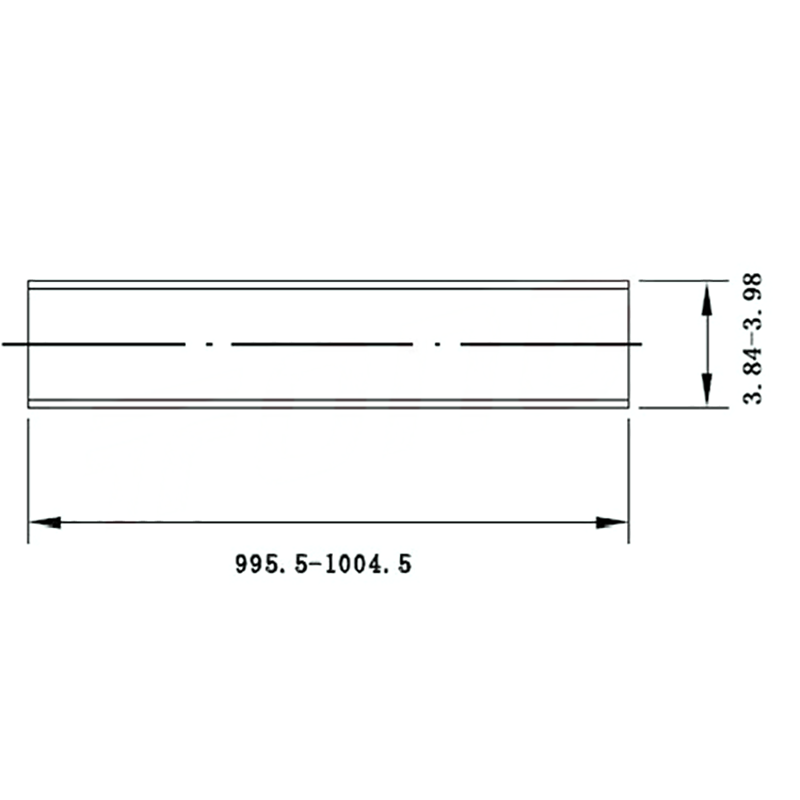
Lenght: 1000mm
Surface: Natural color
Standard: DIN976
Material: SS304
Size: M4
Lenght: 1000mm
Surface: Natural color
Quantity
M4 SS304 Thread Rod, full thread, 1000 mm standard length, DIN 976, 304 stainless steel, plain finish without plating, corrosion- and rust-resistant, property class A2-70. Diameter 4 mm, pitch 0.7 mm, straightness ≤ 0.2 mm/m. Supplied with M4 nut, spring washer and flat washer for immediate installation. Ideal for high-strength, corrosion-critical applications such as curtain walls, PV brackets, food machinery and kitchen/bathroom hardware. Can be cut, re-threaded or bent at will; no chromium-ion leaching, greener and EU-export ready. Each 1 m bar is individually film-wrapped and carton-packed; labels carry batch numbers. Third-party SGS 720 h salt-spray report available, 24 h ex-stock shipment. For volume orders any length 2 m–3 m can be customized and OEM laser marking is supported—samples and trial orders are welcome!
In tensile tests on stainless-steel M4 SS304 Thread Rod, most errors originate from four links: sampling method, cross-section selection, test temperature and data processing. Mishandling any of them can push the scatter above 10 % and directly affect material acceptance and safety-factor calculations.
1. Wrong sampling
GB/T 228.1-2021 permits either “machined specimens” or “full-section actual parts”, but austenitic grades (304, 316, including M4 SS304 Thread Rod) are strengthened mainly by cold work instead of quenching. Machining removes the surface-hardened layer, so the measured Rm is typically 8 %–12 % lower than that from a full-part test. Clause 7.2.2 of GB/T 3098.6-2014 therefore requires austenitic bolts to be tested “on the finished part”.
GB/T 228.1-2021 permits either “machined specimens” or “full-section actual parts”, but austenitic grades (304, 316, including M4 SS304 Thread Rod) are strengthened mainly by cold work instead of quenching. Machining removes the surface-hardened layer, so the measured Rm is typically 8 %–12 % lower than that from a full-part test. Clause 7.2.2 of GB/T 3098.6-2014 therefore requires austenitic bolts to be tested “on the finished part”.
2. Confused cross-section choice
On partially threaded or plain rods (including M4 SS304 Thread Rod) fracture may occur in the plain shank, in the thread or in the run-out. Field practice often uses the minimum diameter at the break, but the standard enforces the uniform “nominal stress area of the thread, As”. Using the shank area underestimates Rm by 5 %–7 %.
On partially threaded or plain rods (including M4 SS304 Thread Rod) fracture may occur in the plain shank, in the thread or in the run-out. Field practice often uses the minimum diameter at the break, but the standard enforces the uniform “nominal stress area of the thread, As”. Using the shank area underestimates Rm by 5 %–7 %.
3. Loss of temperature and strain-rate control
Room-temperature tensile tests require (23 ± 5) °C and a strain rate ≤ 0.008 s⁻¹. In summer shop temperatures often exceed 35 °C; for stainless steels (including M4 SS304 Thread Rod) Rm drops ~1.5 % for every 10 °C rise. If grip cooling is insufficient the specimen surface can reach 40 °C and give a low result. At the cold end the reverse is true: in liquid nitrogen at 77 K the Rm of 304 rises from 580 MPa at room temperature to 1460 MPa. If temperature soaking is too short and the longitudinal gradient exceeds 10 K, data scatter tops 6 %.
Room-temperature tensile tests require (23 ± 5) °C and a strain rate ≤ 0.008 s⁻¹. In summer shop temperatures often exceed 35 °C; for stainless steels (including M4 SS304 Thread Rod) Rm drops ~1.5 % for every 10 °C rise. If grip cooling is insufficient the specimen surface can reach 40 °C and give a low result. At the cold end the reverse is true: in liquid nitrogen at 77 K the Rm of 304 rises from 580 MPa at room temperature to 1460 MPa. If temperature soaking is too short and the longitudinal gradient exceeds 10 K, data scatter tops 6 %.
4. Data processing and rounding
Stainless steels (including M4 SS304 Thread Rod) show no yield plateau, so Rp0.2 must be used; some labs still take 0.1 % permanent set or 0.5 % under maximum load, pushing Rp ~20 MPa high. Gauge-length selection is another pitfall: ISO 6892-1 requires L0 ≥ 2.5 d0, but on thin-wall arc specimens too short a gauge underestimates elongation during necking and inflates Rm by 3 %–5 %.
Stainless steels (including M4 SS304 Thread Rod) show no yield plateau, so Rp0.2 must be used; some labs still take 0.1 % permanent set or 0.5 % under maximum load, pushing Rp ~20 MPa high. Gauge-length selection is another pitfall: ISO 6892-1 requires L0 ≥ 2.5 d0, but on thin-wall arc specimens too short a gauge underestimates elongation during necking and inflates Rm by 3 %–5 %.
5. Surface condition and alignment
After laser remelting, shot-peening or pickling, 316L surface roughness Ra falls from 18 µm to 5 µm, raising Rm by 130 MPa while reducing elongation by 8 %. If the report omits the surface treatment, customers may dispute “strength non-conformity” on re-test. Moreover, a misalignment > 0.1 mm between the specimen (including M4 SS304 Thread Rod) and the grips introduces bending stress, lowering Rm by 2 %–4 % and producing a 45° shear lip on the fracture.
After laser remelting, shot-peening or pickling, 316L surface roughness Ra falls from 18 µm to 5 µm, raising Rm by 130 MPa while reducing elongation by 8 %. If the report omits the surface treatment, customers may dispute “strength non-conformity” on re-test. Moreover, a misalignment > 0.1 mm between the specimen (including M4 SS304 Thread Rod) and the grips introduces bending stress, lowering Rm by 2 %–4 % and producing a 45° shear lip on the fracture.
6. Data traceability and third-party round-robin
The Chinese Society of Theoretical and Applied Mechanics conducted steady-cycle high-temperature tensile tests on S30408 (same material as M4 SS304 Thread Rod). A three-lab round-robin on the same heat showed a maximum Rm spread of 38 MPa (5.2 % relative), chiefly due to different area algorithms and temperature control. It is recommended to retain two pieces per batch for third-party re-testing to GB/T 228.1 and to build the predictive model
Rm = 447 + 166.85 C + 19.5 Si + 8.527 Mn + 2.217 Cr + 1.461 Ni + 853.216 N – 18.654 Cu – 0.18 D
(D = nominal size, mm), which keeps predicted vs. measured deviation within ±3 %.
The Chinese Society of Theoretical and Applied Mechanics conducted steady-cycle high-temperature tensile tests on S30408 (same material as M4 SS304 Thread Rod). A three-lab round-robin on the same heat showed a maximum Rm spread of 38 MPa (5.2 % relative), chiefly due to different area algorithms and temperature control. It is recommended to retain two pieces per batch for third-party re-testing to GB/T 228.1 and to build the predictive model
Rm = 447 + 166.85 C + 19.5 Si + 8.527 Mn + 2.217 Cr + 1.461 Ni + 853.216 N – 18.654 Cu – 0.18 D
(D = nominal size, mm), which keeps predicted vs. measured deviation within ±3 %.
In short, only by rigorously enforcing “actual-part sampling, nominal area, constant temperature, coaxial gripping and third-party cross-check” can the tensile-test error on M4 SS304 Thread Rod be compressed to ±2 %, meeting the ever-tighter material-consistency demands of marine, energy and rail transit projects.
Send Message
