
Recommend Products
 Name: Fujian Monel 400 Double End Stud Material: Monel 400 Standard: ASME B18.2.1 Size: 5/16 to 4 inch Length: 30 to 1000 mm Class: 12.9 Feature: Resistant to hydrofluoric acidQS Fastener: Monel 400 Double End Stud
 Name: Inconel 625 Double End Stud Material: Inconel 625 Standard: ASME B18.2.1 Size: 5/16 to 4 inch Length: 30 to 1000 mm Class: 12.9 Feature: High Yield Strength, Durable Strength and Corrosion ResistanceQS Fastener: Inconel 625 Double End Stud
 Name: Xiamen Inconel 600 High Strength Fastener Material: Inconel 600 Standard: ASME Size: 5/16 to 4 inch Length: 30 to 1000 mm Class: 12.9 Feature: High Yield Strength, Durable Strength and Corrosion ResistanceQS Fastener: Inconel 600 High Strength Fastener
 Name: Inconel 600 Stud Bolt Putian Material: Inconel 600 Standard: ASME B18.2.1 Size: 5/16 to 4 inch Length: 30 to 1000 mm Class: 12.9 Feature: High Yield Strength, Durable Strength and Corrosion ResistanceQS Fastener: Inconel 600 Stud Bolt


M3 Stainless Steel 316 Thread Rod
QS Fastener: M3 Stainless Steel 316 Thread Rod
Name: M3 Stainless Steel 316 Thread Rod
Standard: DIN976
Material: Stainless Steel 316
Size: M3
Lenght: 1000 mm
Surface: Natural color
Standard: DIN976
Material: Stainless Steel 316
Size: M3
Lenght: 1000 mm
Surface: Natural color
Quantity
M3 Stainless Steel 316 Thread Rod, manufactured to DIN 976, 1000 mm full length, can be cut to size as required. Surface finish is self-colour; it withstands seawater, acids and alkalis, and is suitable for structural connections and fastening in chemical, marine and high-end equipment applications.
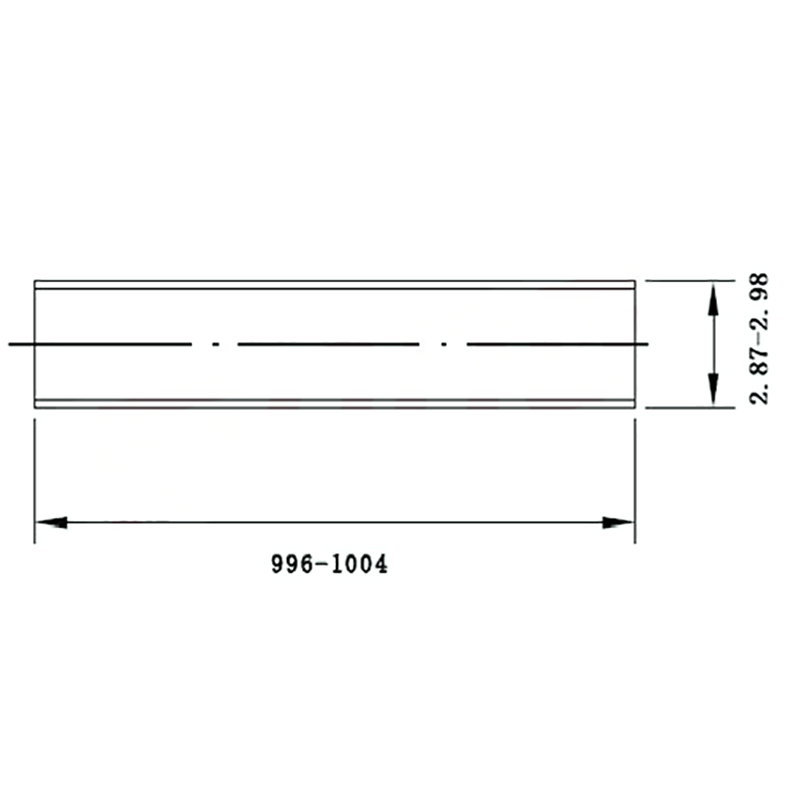
Global fastener standards can be viewed as a three-dimensional coordinate system: the first axis is “system”, the second “dimensional tolerance”, and the third “property class”. Because each system occupies a different position on these three axes, parts that look alike may not be interchangeable. As a typical micro-size fully threaded rod, the M3 Stainless Steel 316 Thread Rod is compared below—using data—across four mainstream systems: ISO (international), DIN (Germany/Europe), ASTM/ASME (USA), and JIS (Japan), with current GB (China) equivalents inserted where applicable.
1. System and designation
ISO uses the prefix “ISO ××××-×”, identical to EN; DIN has largely withdrawn its standards but retains individual numbers such as DIN 976 for fully threaded studs, which also applies to M3 Stainless Steel 316 Thread Rod. The USA separates ASTM (material & property) from ASME (dimensions), e.g., ASTM A193/A320 used with ASME B18.2.1. JIS adopts the format “JIS B××××”. GB/T is adopted identically from ISO, e.g., GB/T 5782 is equivalent to ISO 4014. For M3 Stainless Steel 316 Thread Rod, GB/T 15389 also lists the 1000 mm full-length size.
ISO uses the prefix “ISO ××××-×”, identical to EN; DIN has largely withdrawn its standards but retains individual numbers such as DIN 976 for fully threaded studs, which also applies to M3 Stainless Steel 316 Thread Rod. The USA separates ASTM (material & property) from ASME (dimensions), e.g., ASTM A193/A320 used with ASME B18.2.1. JIS adopts the format “JIS B××××”. GB/T is adopted identically from ISO, e.g., GB/T 5782 is equivalent to ISO 4014. For M3 Stainless Steel 316 Thread Rod, GB/T 15389 also lists the 1000 mm full-length size.
2. Dimensional tolerance
The thread tolerance zone is the bottleneck for interchangeability. ISO/GB specifies 6g for external threads and 6H for internal threads; the unified UNC/UNF system uses 2A/2B, whose pitch-diameter deviation is 0.02–0.04 mm wider than 6g/6H. Consequently, an M3 Stainless Steel 316 Thread Rod made to UNC #5-40 requires a transition nut for interchangeability. Across-flats width for M3 hexagon heads: ISO/GB = 5.5 mm; ASME B18.2.1 = 5.38 mm. The 0.12 mm difference can cause cam-out under high torque—especially critical for M3 Stainless Steel 316 Thread Rod.
The thread tolerance zone is the bottleneck for interchangeability. ISO/GB specifies 6g for external threads and 6H for internal threads; the unified UNC/UNF system uses 2A/2B, whose pitch-diameter deviation is 0.02–0.04 mm wider than 6g/6H. Consequently, an M3 Stainless Steel 316 Thread Rod made to UNC #5-40 requires a transition nut for interchangeability. Across-flats width for M3 hexagon heads: ISO/GB = 5.5 mm; ASME B18.2.1 = 5.38 mm. The 0.12 mm difference can cause cam-out under high torque—especially critical for M3 Stainless Steel 316 Thread Rod.
3. Mechanical property class
ISO/GB carbon-steel bolts cover 11 classes from 3.6 to 12.9; class 8.8 has tensile strength Rm ≥ 800 MPa and yield strength ReL ≥ 640 MPa. ASTM A193 B7 is comparable to class 10.9, with Rm ≥ 860 MPa, but its hardness requirement is HRC 35 max, higher than the HRC 32–39 range for ISO 10.9. For stainless-steel 316 bolts, ISO 3506 A4-70 gives Rm = 700 MPa, whereas ASTM F593 316 Cond. B only 550 MPa. Therefore, M3 Stainless Steel 316 Thread Rod cannot be substituted directly without verifying the property class.
ISO/GB carbon-steel bolts cover 11 classes from 3.6 to 12.9; class 8.8 has tensile strength Rm ≥ 800 MPa and yield strength ReL ≥ 640 MPa. ASTM A193 B7 is comparable to class 10.9, with Rm ≥ 860 MPa, but its hardness requirement is HRC 35 max, higher than the HRC 32–39 range for ISO 10.9. For stainless-steel 316 bolts, ISO 3506 A4-70 gives Rm = 700 MPa, whereas ASTM F593 316 Cond. B only 550 MPa. Therefore, M3 Stainless Steel 316 Thread Rod cannot be substituted directly without verifying the property class.
4. Surface treatment and marking
ISO/GB class 8.8 is default phosphated and oiled, marked “8.8”; ASTM A325 Type 1 requires hot-dip galvanizing, marked “A325”; JIS F10T demands coating ≥ 5 μm, marked “F10T”. Zinc-coating thickness: ISO averages 5–8 μm; ASTM A153 requires ≥ 43 μm. The thick coating alters thread fit and often calls for enlarged clearance holes. M3 Stainless Steel 316 Thread Rod, however, is usually supplied in the pickled-and-passivated self-colour condition, providing excellent corrosion resistance without additional coatings.
ISO/GB class 8.8 is default phosphated and oiled, marked “8.8”; ASTM A325 Type 1 requires hot-dip galvanizing, marked “A325”; JIS F10T demands coating ≥ 5 μm, marked “F10T”. Zinc-coating thickness: ISO averages 5–8 μm; ASTM A153 requires ≥ 43 μm. The thick coating alters thread fit and often calls for enlarged clearance holes. M3 Stainless Steel 316 Thread Rod, however, is usually supplied in the pickled-and-passivated self-colour condition, providing excellent corrosion resistance without additional coatings.
Conclusion: Always verify the three points—system, tolerance and property—before selection to avoid the risk of “looks the same, but won’t fit or breaks after fitting”. When M3 Stainless Steel 316 Thread Rod is required, first confirm the standard number, the thread tolerance zone, and the A4-70 property class before placing an order.
Send Message
