
Recommend Products
 Name: Fujian Monel 400 Double End Stud Material: Monel 400 Standard: ASME B18.2.1 Size: 5/16 to 4 inch Length: 30 to 1000 mm Class: 12.9 Feature: Resistant to hydrofluoric acidQS Fastener: Monel 400 Double End Stud
 Name: Inconel 625 Double End Stud Material: Inconel 625 Standard: ASME B18.2.1 Size: 5/16 to 4 inch Length: 30 to 1000 mm Class: 12.9 Feature: High Yield Strength, Durable Strength and Corrosion ResistanceQS Fastener: Inconel 625 Double End Stud
 Name: Xiamen Inconel 600 High Strength Fastener Material: Inconel 600 Standard: ASME Size: 5/16 to 4 inch Length: 30 to 1000 mm Class: 12.9 Feature: High Yield Strength, Durable Strength and Corrosion ResistanceQS Fastener: Inconel 600 High Strength Fastener
 Name: Inconel 600 Stud Bolt Putian Material: Inconel 600 Standard: ASME B18.2.1 Size: 5/16 to 4 inch Length: 30 to 1000 mm Class: 12.9 Feature: High Yield Strength, Durable Strength and Corrosion ResistanceQS Fastener: Inconel 600 Stud Bolt


M3 Stainless Steel 316 Stud Bolt
QS Fastener: M3 Stainless Steel 316 Stud Bolt
Name: M3 Stainless Steel 316 Stud Bolt
Standard: DIN976
Material: Stainless Steel 316
Size: M3
Lenght: 1000 mm
Surface: Natural color
Standard: DIN976
Material: Stainless Steel 316
Size: M3
Lenght: 1000 mm
Surface: Natural color
Quantity
M3 Stainless Steel 316 Stud Bolt, manufactured to DIN 976, is supplied in full 1000 mm lengths and can be cut to any required length on request. The surface remains in its natural finish, offering excellent resistance to chloride-ion corrosion for marine, chemical, high-end electronics, and similarly demanding environments. The thread is continuous and uncut, ensuring fast installation, high strength, and long service life.
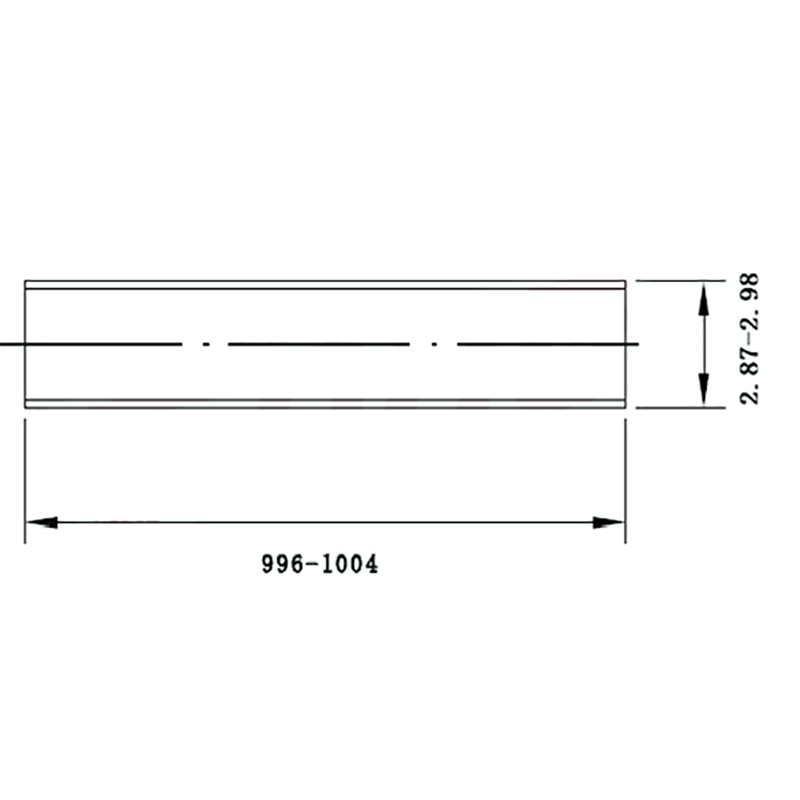
The 316 stainless-steel double-end stud—M3 Stainless Steel 316 Stud Bolt—travels through six critical stages from coil to finished product: “material selection → forming → threading → heat treatment → surface treatment → full inspection.” Each stage governs the reliable service life of M3 Stainless Steel 316 Stud Bolt in harsh marine and chemical settings.
1. Raw-material preparation
Hot-rolled AISI 316 coil (equivalent to GB 0Cr17Ni12Mo2) is selected. Chemical composition, intergranular corrosion, and δ-ferrite content are rechecked. The φ5.5 mm coil is then drawn through multiple passes to φ3 mm with on-line eddy-current inspection, eliminating cracks and inclusions and providing a clean substrate for M3 Stainless Steel 316 Stud Bolt.
Hot-rolled AISI 316 coil (equivalent to GB 0Cr17Ni12Mo2) is selected. Chemical composition, intergranular corrosion, and δ-ferrite content are rechecked. The φ5.5 mm coil is then drawn through multiple passes to φ3 mm with on-line eddy-current inspection, eliminating cracks and inclusions and providing a clean substrate for M3 Stainless Steel 316 Stud Bolt.
2. Cold-heading forming
For the small M3 diameter, a multi-station cold-header completes cutting-off, initial heading, and finish heading in one cycle, simultaneously forming steps on both ends. Continuous metal flow lines save material and improve the fatigue resistance of M3 Stainless Steel 316 Stud Bolt.
For the small M3 diameter, a multi-station cold-header completes cutting-off, initial heading, and finish heading in one cycle, simultaneously forming steps on both ends. Continuous metal flow lines save material and improve the fatigue resistance of M3 Stainless Steel 316 Stud Bolt.
3. Thread rolling
Threads are formed by rolling, not cutting: both ends are rolled to pitch diameter before high-speed rotating dies press in the full profile. Rolling refines grain structure at thread crests, raising surface hardness by 20–30 HV, while the thread root adopts a smooth radius, multiplying the fatigue life of the entire M3 Stainless Steel 316 Stud Bolt by 2–3 times.
Threads are formed by rolling, not cutting: both ends are rolled to pitch diameter before high-speed rotating dies press in the full profile. Rolling refines grain structure at thread crests, raising surface hardness by 20–30 HV, while the thread root adopts a smooth radius, multiplying the fatigue life of the entire M3 Stainless Steel 316 Stud Bolt by 2–3 times.
4. Solution heat treatment
As an austenitic stainless steel, 316 requires solution annealing: hold at 1050 °C ± 10 °C, then rapid water quench to dissolve chromium carbides, restore corrosion resistance, and relieve cold-work stresses. The full 1000 mm length of M3 Stainless Steel 316 Stud Bolt passes evenly through a roller-hearth solution furnace to prevent distortion.
As an austenitic stainless steel, 316 requires solution annealing: hold at 1050 °C ± 10 °C, then rapid water quench to dissolve chromium carbides, restore corrosion resistance, and relieve cold-work stresses. The full 1000 mm length of M3 Stainless Steel 316 Stud Bolt passes evenly through a roller-hearth solution furnace to prevent distortion.
5. Straightening and cutting
Slight distortion after solution treatment is corrected on a six-roll straightener on-line, achieving straightness ≤ 0.5 mm per metre. The bar is then cut to 1000 mm, chamfered and deburred on both ends for easy assembly, ensuring end-face quality on every M3 Stainless Steel 316 Stud Bolt.
Slight distortion after solution treatment is corrected on a six-roll straightener on-line, achieving straightness ≤ 0.5 mm per metre. The bar is then cut to 1000 mm, chamfered and deburred on both ends for easy assembly, ensuring end-face quality on every M3 Stainless Steel 316 Stud Bolt.
6. Surface treatment
Although the natural 316 finish already meets DIN 976 corrosion requirements, passivation is still applied: alkaline degreasing → nitric acid + sodium dichromate passivation → de-ionised water rinse → hot-air drying. Passivation film thickness ≥ 0.5 µm; salt-spray test ≥ 1000 h without rust spots, providing long-term protection for M3 Stainless Steel 316 Stud Bolt.
Although the natural 316 finish already meets DIN 976 corrosion requirements, passivation is still applied: alkaline degreasing → nitric acid + sodium dichromate passivation → de-ionised water rinse → hot-air drying. Passivation film thickness ≥ 0.5 µm; salt-spray test ≥ 1000 h without rust spots, providing long-term protection for M3 Stainless Steel 316 Stud Bolt.
7. Full inspection and packaging
Each piece is checked dimensionally, for thread GO/NO-GO gauge fit, hardness (≤ HRB 95), and spectroscopic confirmation of Mo ≥ 2.0 %, followed by 100 % magnetic-particle inspection. Approved parts are sleeved in PVC, labelled, packed in moisture-proof cartons, and palletised, ensuring every batch of M3 Stainless Steel 316 Stud Bolt arrives on-site defect-free.
Each piece is checked dimensionally, for thread GO/NO-GO gauge fit, hardness (≤ HRB 95), and spectroscopic confirmation of Mo ≥ 2.0 %, followed by 100 % magnetic-particle inspection. Approved parts are sleeved in PVC, labelled, packed in moisture-proof cartons, and palletised, ensuring every batch of M3 Stainless Steel 316 Stud Bolt arrives on-site defect-free.
Through this process, the M3 × 1000 mm 316 double-end stud—M3 Stainless Steel 316 Stud Bolt—delivers not only precise dimensions but also outstanding chloride-ion corrosion resistance and fatigue strength, making it ideal for offshore wind-tower flanges, chemical columns, and other high-specification equipment.
Send Message
