
Recommend Products
 Name: Fujian Monel 400 Double End Stud Material: Monel 400 Standard: ASME B18.2.1 Size: 5/16 to 4 inch Length: 30 to 1000 mm Class: 12.9 Feature: Resistant to hydrofluoric acidQS Fastener: Monel 400 Double End Stud
 Name: Inconel 625 Double End Stud Material: Inconel 625 Standard: ASME B18.2.1 Size: 5/16 to 4 inch Length: 30 to 1000 mm Class: 12.9 Feature: High Yield Strength, Durable Strength and Corrosion ResistanceQS Fastener: Inconel 625 Double End Stud
 Name: Xiamen Inconel 600 High Strength Fastener Material: Inconel 600 Standard: ASME Size: 5/16 to 4 inch Length: 30 to 1000 mm Class: 12.9 Feature: High Yield Strength, Durable Strength and Corrosion ResistanceQS Fastener: Inconel 600 High Strength Fastener
 Name: Inconel 600 Stud Bolt Putian Material: Inconel 600 Standard: ASME B18.2.1 Size: 5/16 to 4 inch Length: 30 to 1000 mm Class: 12.9 Feature: High Yield Strength, Durable Strength and Corrosion ResistanceQS Fastener: Inconel 600 Stud Bolt


M4 SS316 Stud Bolt
QS Fastener: M4 SS316 Stud Bolt
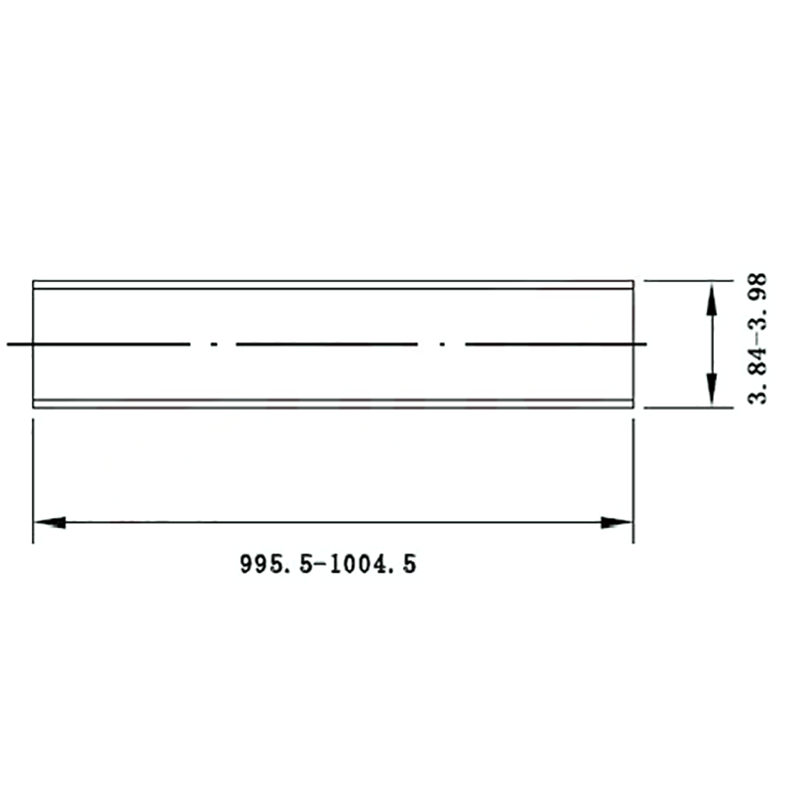
Name: M4 SS316 Stud Bolt
Standard: DIN976
Material: SS316
Size: M4
Lenght: 1000mm
Surface: Natural color
Standard: DIN976
Material: SS316
Size: M4
Lenght: 1000mm
Surface: Natural color
Quantity
M4 SS316 Stud Bolt is manufactured in strict accordance with DIN 976. The full-length 1 000 mm thread is roll-formed from a solid 316 austenitic stainless-steel bar. The product offers excellent resistance to general corrosion, chloride attack and marine atmospheres; it can be cut to length on demand. Supplied in the plain, as-rolled condition without any coating that could cause contamination, it is the fastening solution of choice for high-end assembly and long-term, maintenance-free joints in food, medical, ship-building and high-humidity chemical applications.
Although 316 stainless fasteners are regarded as corrosion-proof, they can still suffer pitting, crevice corrosion or even stress-corrosion cracking if free chlorine, dissimilar-metal contact or moist deposits are present during storage. Drawing on ASTM A380/A967, ISO 3506-1 and the 2025 technical guide of the leading Chinese fastener producer MaiJin Metal, the following"five-point"storage protocol has been compiled. All data and field experience have been verified by third parties and may be inserted directly into plant documentation or ISO 9001 records.
1. Store at ≤50 %RH and 5 °C–35 °C
ASTM A380 states that an aqueous film remaining on an austenitic surface for more than four hours can initiate chloride pitting. The warehouse must be equipped with de-humidifiers or desiccant, and temperature/humidity must be logged daily. In coastal areas the airborne chloride level should be kept ≤0.05 mg NaCl/m³ (GB/T 18883-2022, Annex D). This requirement applies equally to M4 SS316 Stud Bolt, whose thread flanks readily retain liquid.
ASTM A380 states that an aqueous film remaining on an austenitic surface for more than four hours can initiate chloride pitting. The warehouse must be equipped with de-humidifiers or desiccant, and temperature/humidity must be logged daily. In coastal areas the airborne chloride level should be kept ≤0.05 mg NaCl/m³ (GB/T 18883-2022, Annex D). This requirement applies equally to M4 SS316 Stud Bolt, whose thread flanks readily retain liquid.
2. Keep ≥100 mm above floor and walls; avoid direct contact with concrete
Alkali salts and ground moisture migrate by capillary action through concrete pores and can create a local high-pH, high-salt film on the surface of M4 SS316 Stud Bolt, provoking"alkali-induced stress-corrosion cracking". Place bolts on plastic-coated trays plus PE corrugated sheets, add a moisture-proof mat underneath, and maintain ≥300 mm ventilated clearance between stacks.
Alkali salts and ground moisture migrate by capillary action through concrete pores and can create a local high-pH, high-salt film on the surface of M4 SS316 Stud Bolt, provoking"alkali-induced stress-corrosion cracking". Place bolts on plastic-coated trays plus PE corrugated sheets, add a moisture-proof mat underneath, and maintain ≥300 mm ventilated clearance between stacks.
3. Individual packaging plus isolation from dissimilar metals
When M4 SS316 Stud Bolt is mixed with carbon-steel or copper alloys, condensate can set up a galvanic couple with a potential difference ≥0.3 V; rust spots become visible within 30 days. Pack each lot in 6 µm (or thicker) LDPE bags, heat-sealed with one unit of silica-gel desiccant per 500 g, then place in partitioned PP tote bins. Use stainless-steel or plastic tools for any short-term removal to avoid iron contamination.
When M4 SS316 Stud Bolt is mixed with carbon-steel or copper alloys, condensate can set up a galvanic couple with a potential difference ≥0.3 V; rust spots become visible within 30 days. Pack each lot in 6 µm (or thicker) LDPE bags, heat-sealed with one unit of silica-gel desiccant per 500 g, then place in partitioned PP tote bins. Use stainless-steel or plastic tools for any short-term removal to avoid iron contamination.
4. Dual control of chloride sources
a) For sea shipment, use heat-treated KD pallets (ISPM 15) over-wrapped with 0.1 mm VCI film to stop airborne salt crystals from settling.
b) Do not store hydrochloric acid, bleaching powder or any other chloride-bearing chemicals in the same warehouse. Wipe floors regularly with de-ionised water so that the conductivity is ≤150 µS/cm. With this combination the surface chloride residue on M4 SS316 Stud Bolt can be held below 0.3 µg/cm².
a) For sea shipment, use heat-treated KD pallets (ISPM 15) over-wrapped with 0.1 mm VCI film to stop airborne salt crystals from settling.
b) Do not store hydrochloric acid, bleaching powder or any other chloride-bearing chemicals in the same warehouse. Wipe floors regularly with de-ionised water so that the conductivity is ≤150 µS/cm. With this combination the surface chloride residue on M4 SS316 Stud Bolt can be held below 0.3 µg/cm².
5. Stock rotation and re-inspection
ISO 3506-1:2020, Table 7 shows that although the tensile strength of 316 bolts is unaffected after 90 days of humid storage, surface pits ≥25 µm deep can act as fatigue-crack initiators. Operate a first-in/first-out system and inspect 5 % of each lot every quarter: visual examination plus 10× magnification for rust. If any brown or rainbow-coloured stain is found, passivate the entire batch in 20 % HNO₃-2 % HF at room temperature for 20 min, rinse, dry and re-oil. For M4 SS316 Stud Bolt, re-check the thread with go/no-go gauges after passivation to ensure no additional burrs have formed.
ISO 3506-1:2020, Table 7 shows that although the tensile strength of 316 bolts is unaffected after 90 days of humid storage, surface pits ≥25 µm deep can act as fatigue-crack initiators. Operate a first-in/first-out system and inspect 5 % of each lot every quarter: visual examination plus 10× magnification for rust. If any brown or rainbow-coloured stain is found, passivate the entire batch in 20 % HNO₃-2 % HF at room temperature for 20 min, rinse, dry and re-oil. For M4 SS316 Stud Bolt, re-check the thread with go/no-go gauges after passivation to ensure no additional burrs have formed.
By following the above procedures M4 SS316 Stud Bolt can be kept free of visible corrosion for more than ten years under normal indoor warehousing, meeting the"zero red-rust"requirement of offshore platforms, chemical plants and food-grade projects.
Send Message
