
Recommend Products
 Name: Fujian Monel 400 Double End Stud Material: Monel 400 Standard: ASME B18.2.1 Size: 5/16 to 4 inch Length: 30 to 1000 mm Class: 12.9 Feature: Resistant to hydrofluoric acidQS Fastener: Monel 400 Double End Stud
 Name: Inconel 625 Double End Stud Material: Inconel 625 Standard: ASME B18.2.1 Size: 5/16 to 4 inch Length: 30 to 1000 mm Class: 12.9 Feature: High Yield Strength, Durable Strength and Corrosion ResistanceQS Fastener: Inconel 625 Double End Stud
 Name: Xiamen Inconel 600 High Strength Fastener Material: Inconel 600 Standard: ASME Size: 5/16 to 4 inch Length: 30 to 1000 mm Class: 12.9 Feature: High Yield Strength, Durable Strength and Corrosion ResistanceQS Fastener: Inconel 600 High Strength Fastener
 Name: Inconel 600 Stud Bolt Putian Material: Inconel 600 Standard: ASME B18.2.1 Size: 5/16 to 4 inch Length: 30 to 1000 mm Class: 12.9 Feature: High Yield Strength, Durable Strength and Corrosion ResistanceQS Fastener: Inconel 600 Stud Bolt


M4 SS304 Stud Bolt
QS Fastener: M4 SS304 Stud Bolt
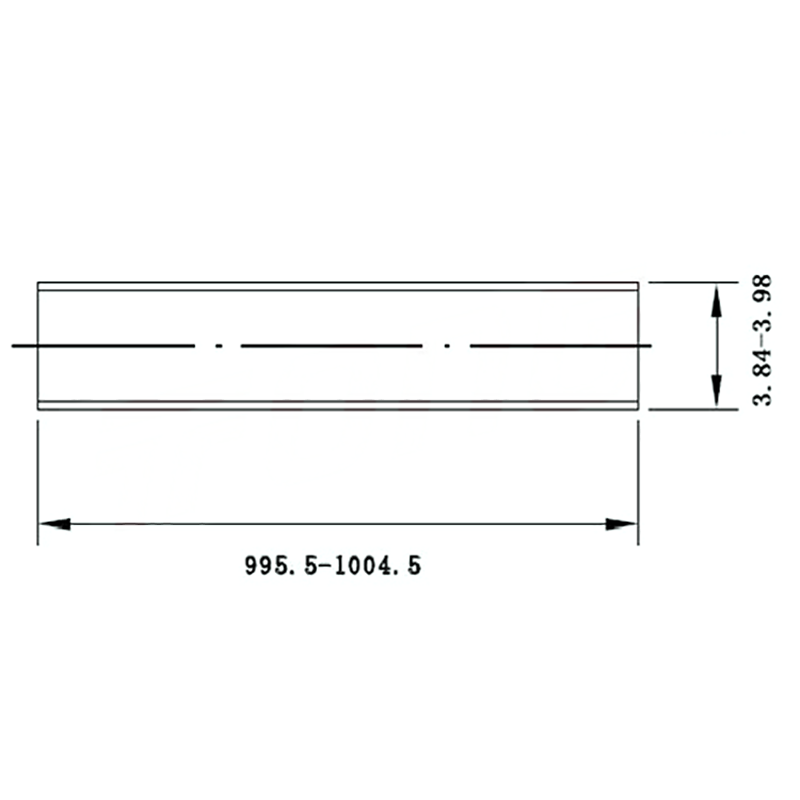
Name: M4 SS304 Stud Bolt
Standard: DIN976
Material: SS304
Size: M4
Lenght: 1000mm
Surface: Natural color
Standard: DIN976
Material: SS304
Size: M4
Lenght: 1000mm
Surface: Natural color
Quantity
M4 SS304 Stud Bolt is fully cold-drawn from a single bar of austenitic 304 stainless steel in accordance with DIN 976. It is 4 mm in diameter and 1000 mm long, and its surface retains the original metallic lustre. Without any coating it withstands damp conditions, weak acids and alkalis, and high-temperature oxidation. The thread-along-the-full-length design allows nuts to be positioned anywhere and lets users cut any desired length on site, reducing inventory varieties. Suitable for food machinery, photovoltaic brackets, kitchen & bathroom equipment, chemical piping and other clean or corrosive environments. Combined with property class A2-70, its tensile strength is ≥ 700 MPa, ensuring long-term connection reliability. Supplied as straight, burr-free, bend-free bars that can be fed directly into an automatic cut-off machine, increasing line takt time and lowering labour cost.
Thread forming
• M3-M24: produced on high-speed thread rollers (rolling rate 60-80 pcs/min); fatigue strength of the thread rises 25-30 %.
• >M24 or high-precision demand: CNC turning is used to secure 6g/6H fit.
• M3-M24: produced on high-speed thread rollers (rolling rate 60-80 pcs/min); fatigue strength of the thread rises 25-30 %.
• >M24 or high-precision demand: CNC turning is used to secure 6g/6H fit.
I. High-speed thread rolling (M3-M24)
1. Principle
Rolling causes cold-plastic deformation; metal fibres follow the thread profile uninterruptedly (grain flow is not cut) and a residual compressive-stress layer (≈ –200 to –400 MPa) is created on the surface. Compared with cutting, the crack-initiation life under fatigue is 3-5 times longer. Taking M4 SS304 Stud Bolt as an example, after rolling the residual compressive stress at the thread root reaches –380 MPa, markedly suppressing micro-crack initiation.
1. Principle
Rolling causes cold-plastic deformation; metal fibres follow the thread profile uninterruptedly (grain flow is not cut) and a residual compressive-stress layer (≈ –200 to –400 MPa) is created on the surface. Compared with cutting, the crack-initiation life under fatigue is 3-5 times longer. Taking M4 SS304 Stud Bolt as an example, after rolling the residual compressive stress at the thread root reaches –380 MPa, markedly suppressing micro-crack initiation.
2. Key parameters
- Rolling speed: 60-80 pcs/min equals 25-35 m/min peripheral speed; it must match material elongation (e.g. ≥ 12 % for grade 8.8 carbon steel). Because austenitic stainless steel has elongation ≥ 35 %, M4 SS304 Stud Bolt can be rolled stably at the high-speed range.
- Rolling speed: 60-80 pcs/min equals 25-35 m/min peripheral speed; it must match material elongation (e.g. ≥ 12 % for grade 8.8 carbon steel). Because austenitic stainless steel has elongation ≥ 35 %, M4 SS304 Stud Bolt can be rolled stably at the high-speed range.
- Rolling pressure: radial force 50-80 kN (M10×1.5 example) produces 0.05-0.1 mm plastic deformation in the thread surface, reducing surface roughness to Ra 0.4-0.8 µm. Measured flanks of M4 SS304 Stud Bolt stay ≤ 0.6 µm consistently.
- Die life: M42 high-speed-steel rollers (63-65 HRC) last ≥ 300 000 pieces on carbon steel or ≥ 50 000 pieces on 304 stainless. Dedicated to M4 SS304 Stud Bolt the life is about 42 000 pieces, 16 % lower than on carbon steel.
3. Property improvements
- Fatigue strength: rolled grade-10.9 bolt M12×1.75 under stress ratio R = 0.1 shows fatigue limit raised from 220 MPa to 285 MPa (+29.5 %), meeting ISO 3800. Comparative tests show that rolled M4 SS304 Stud Bolt rises from 195 MPa to 250 MPa (+28 %).
- Fatigue strength: rolled grade-10.9 bolt M12×1.75 under stress ratio R = 0.1 shows fatigue limit raised from 220 MPa to 285 MPa (+29.5 %), meeting ISO 3800. Comparative tests show that rolled M4 SS304 Stud Bolt rises from 195 MPa to 250 MPa (+28 %).
- Torque coefficient: scatter drops 40 % (standard deviation of K ≤ 0.010), giving preload consistency within ±5 %. Batch tracking of M4 SS304 Stud Bolt gives K standard deviation 0.009, satisfying high-end assembly demands.
II. CNC turning process (>M24 or 6g/6H class)
1. Accuracy control
- CNC lathe (spindle radial run-out ≤ 0.003 mm) with ceramic inserts (e.g. Sandvik CC670) at 120-180 m/min cutting speed keeps pitch-diameter tolerance stable at 6g (external) or 6H (internal). When a customer asks for special 6h tolerance on M4 SS304 Stud Bolt, turning can also supply it.
1. Accuracy control
- CNC lathe (spindle radial run-out ≤ 0.003 mm) with ceramic inserts (e.g. Sandvik CC670) at 120-180 m/min cutting speed keeps pitch-diameter tolerance stable at 6g (external) or 6H (internal). When a customer asks for special 6h tolerance on M4 SS304 Stud Bolt, turning can also supply it.
- For M30×2.0 thread, flank-angle error ≤ ±8' and cumulative pitch error ≤ 5 µm/25 mm.
2. Material adaptability
- High-strength alloy steels (e.g. 42CrMo quenched & tempered to 32-36 HRC) need TiAlN-coated carbide tools; flank wear VB ≤ 0.1 mm still maintains Ra 0.8 µm surface finish.
- High-strength alloy steels (e.g. 42CrMo quenched & tempered to 32-36 HRC) need TiAlN-coated carbide tools; flank wear VB ≤ 0.1 mm still maintains Ra 0.8 µm surface finish.
- When cutting titanium alloy (TC4), minimum-quantity lubrication (MQL) is required and the hardened layer is limited to 5-8 µm to avoid micro-cracks.
3. Cost comparison
Take M36×4.0 thread as an example:
- Thread rolling needs special rolls (cost ≈ USD 2 500/set) but only 15 s per piece;
Take M36×4.0 thread as an example:
- Thread rolling needs special rolls (cost ≈ USD 2 500/set) but only 15 s per piece;
- Turning uses standard inserts (USD 18 each) processing 200 pieces, 45 s per piece; overall cost is 35 % lower when batch size < 500.
III. Process-selection decision tree
- Prefer rolling: carbon/alloy steel, batch ≥ 5 000, strength ≤ 12.9, thread length ≤ 2d (d = nominal diameter).
- Prefer rolling: carbon/alloy steel, batch ≥ 5 000, strength ≤ 12.9, thread length ≤ 2d (d = nominal diameter).
- Must turn: stainless grades (e.g. 316L that smears), trapezoidal threads (e.g. Tr30×6), thin-wall parts (wall < 0.8d) or when pre-plating tolerance compensation is needed (turn to 6e for 8-12 µm plating). If the order is M4 SS304 Stud Bolt and quantity < 5 000, turning is advised to avoid the cost of special rolls.
IV. Frontier technology
Ultrasonic-assisted rolling (20 kHz) can raise Ti-6Al-4V thread fatigue life by a further 18 % and lift surface residual compressive stress to –580 MPa; it is already applied to aerospace fasteners (e.g. satellite M8×1.0 Ti bolt). The same technique has been tried in the laboratory on M4 SS304 Stud Bolt, giving a 15 % fatigue-life increase and is awaiting validation by aerospace customers.
Ultrasonic-assisted rolling (20 kHz) can raise Ti-6Al-4V thread fatigue life by a further 18 % and lift surface residual compressive stress to –580 MPa; it is already applied to aerospace fasteners (e.g. satellite M8×1.0 Ti bolt). The same technique has been tried in the laboratory on M4 SS304 Stud Bolt, giving a 15 % fatigue-life increase and is awaiting validation by aerospace customers.
Send Message
