
Recommend Products
 Name: Fujian Monel 400 Double End Stud Material: Monel 400 Standard: ASME B18.2.1 Size: 5/16 to 4 inch Length: 30 to 1000 mm Class: 12.9 Feature: Resistant to hydrofluoric acidQS Fastener: Monel 400 Double End Stud
 Name: Inconel 625 Double End Stud Material: Inconel 625 Standard: ASME B18.2.1 Size: 5/16 to 4 inch Length: 30 to 1000 mm Class: 12.9 Feature: High Yield Strength, Durable Strength and Corrosion ResistanceQS Fastener: Inconel 625 Double End Stud
 Name: Xiamen Inconel 600 High Strength Fastener Material: Inconel 600 Standard: ASME Size: 5/16 to 4 inch Length: 30 to 1000 mm Class: 12.9 Feature: High Yield Strength, Durable Strength and Corrosion ResistanceQS Fastener: Inconel 600 High Strength Fastener
 Name: Inconel 600 Stud Bolt Putian Material: Inconel 600 Standard: ASME B18.2.1 Size: 5/16 to 4 inch Length: 30 to 1000 mm Class: 12.9 Feature: High Yield Strength, Durable Strength and Corrosion ResistanceQS Fastener: Inconel 600 Stud Bolt


M4 DIN976 Thread Rod
QS Fastener: M4 DIN976 Thread Rod
Name: M4 DIN976 Thread Rod
Standard: DIN976
Material: SS304
Size: M4
Lenght: 1000mm
Surface: Natural color
Standard: DIN976
Material: SS304
Size: M4
Lenght: 1000mm
Surface: Natural color
Quantity
M4 DIN976 Thread Rod – made from SS304 stainless steel, fully threaded along the entire 1 000 mm length.
The “as-rolled” finish needs no further treatment; it is inherently corrosion-resistant and aesthetically pleasing.
Tight diameter tolerance and excellent straightness allow perfect engagement with standard DIN 934 / 985 nuts.
Used throughout machinery, precision instruments, jigs & fixtures and decorative structures for reliable connection and fine adjustment.
Shipped in one-piece form and can be cut to length on demand, minimising waste.
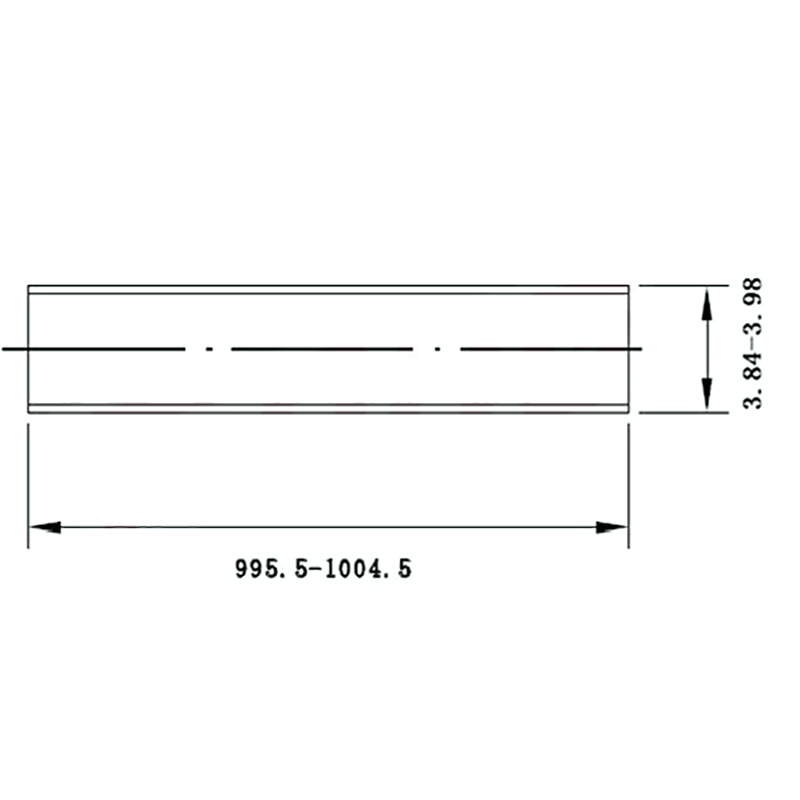
The “as-rolled” finish needs no further treatment; it is inherently corrosion-resistant and aesthetically pleasing.
Tight diameter tolerance and excellent straightness allow perfect engagement with standard DIN 934 / 985 nuts.
Used throughout machinery, precision instruments, jigs & fixtures and decorative structures for reliable connection and fine adjustment.
Shipped in one-piece form and can be cut to length on demand, minimising waste.
SS304 retains its strength in humid or mildly acidic / alkaline surroundings, offering an economical balance of mechanical performance and weather resistance.
Large inventory on hand; bulk production of customised lengths and finishes supported to cut cost and shorten lead-time.
Large inventory on hand; bulk production of customised lengths and finishes supported to cut cost and shorten lead-time.
Copper behaves as a “double-edged” element in 304 stainless fasteners: its influence depends on the concentration window, thermal history and service environment.
Taking M4 DIN976 Thread Rod as an example, ASTM A240 / GB/T 4356 does not impose a lower limit on Cu in 304; the upper limit is normally ≤0.5 % (mill agreements may relax it to ≤1 %).
Taking M4 DIN976 Thread Rod as an example, ASTM A240 / GB/T 4356 does not impose a lower limit on Cu in 304; the upper limit is normally ≤0.5 % (mill agreements may relax it to ≤1 %).
Within this “residual” band copper stays in solid solution and has virtually no effect on microstructure or properties; the material still fulfils all mechanical and corrosion requirements of GB/T 3098.6 A2-70.
When Cu > 1 % the influence becomes measurable:
1. Corrosion resistance – in reducing acids such as H₂SO₄ or H₃PO₄, Cu²⁺ promotes Cr enrichment at the surface, stabilising the passive film and lowering the uniform corrosion rate by more than 20 %.
In chloride-containing media, however, Cu-rich phases act as efficient cathodes that accelerate pit nucleation, dropping the critical pitting potential by 30–50 mV.
2. Mechanical properties – Cu in solid solution raises the stacking-fault energy, suppressing dislocation pile-up during cold work.
As a result the tensile strength (σb) of M4 DIN976 Thread Rod falls by roughly 5 % while elongation increases by about 10 %, an advantage for deep-drawn or cold-headed fastener blanks.
As a result the tensile strength (σb) of M4 DIN976 Thread Rod falls by roughly 5 % while elongation increases by about 10 %, an advantage for deep-drawn or cold-headed fastener blanks.
When Cu > 2.5 % and the rod is aged at 700–750 °C, nano-scale ε-Cu precipitates provide ~120 MPa of precipitation hardening (+30 HV), at the expense of ductility.
3. Hot working & welding – Cu lowers the melting point of low-melting phases; if hot-rolling is carried out below 1100 °C a Cu-rich liquid film can form at the edges, initiating edge cracking on M4 DIN976 Thread Rod.
The post-weld hot-cracking sensitivity index (BTR) rises almost linearly with Cu, so weldable fastener steels should keep Cu ≤ 0.3 %.
In summary, keeping Cu between 0.3 % and 0.5 % is sufficient for general 304 fasteners that must remain corrosion-resistant, cold-formable and weldable.
If the antimicrobial effect of Cu, improved resistance to sulphuric acid or precipitation strengthening are required, design M4 DIN976 Thread Rod with 1.5–3.0 % Cu and apply a two-step treatment (solution anneal + 750 °C × 3 h ageing), while also assessing pitting and hot-cracking risks before using the product in high-end equipment or medical fasteners.
Send Message
