
Recommend Products
 Name: Fujian Monel 400 Double End Stud Material: Monel 400 Standard: ASME B18.2.1 Size: 5/16 to 4 inch Length: 30 to 1000 mm Class: 12.9 Feature: Resistant to hydrofluoric acidQS Fastener: Monel 400 Double End Stud
 Name: Inconel 625 Double End Stud Material: Inconel 625 Standard: ASME B18.2.1 Size: 5/16 to 4 inch Length: 30 to 1000 mm Class: 12.9 Feature: High Yield Strength, Durable Strength and Corrosion ResistanceQS Fastener: Inconel 625 Double End Stud
 Name: Xiamen Inconel 600 High Strength Fastener Material: Inconel 600 Standard: ASME Size: 5/16 to 4 inch Length: 30 to 1000 mm Class: 12.9 Feature: High Yield Strength, Durable Strength and Corrosion ResistanceQS Fastener: Inconel 600 High Strength Fastener
 Name: Inconel 600 Stud Bolt Putian Material: Inconel 600 Standard: ASME B18.2.1 Size: 5/16 to 4 inch Length: 30 to 1000 mm Class: 12.9 Feature: High Yield Strength, Durable Strength and Corrosion ResistanceQS Fastener: Inconel 600 Stud Bolt


China Suppliers Stud Bolt
QS Fastener: China Suppliers Stud Bolt
Name: China Suppliers Stud Bolt
Standard: DIN976
Material: SS316
Size: M3
Lenght: 1000 mm
Surface: Natural color
Standard: DIN976
Material: SS316
Size: M3
Lenght: 1000 mm
Surface: Natural color
Quantity
As a senior fastener engineer, I often specify materials not just by grade but by real-world performance under aggressive service conditions. When my team evaluates China suppliers for critical fastening components, the stud bolt selection must balance corrosion resistance, mechanical reliability, and long-term cost. The M3 SS316 stud bolt manufactured to DIN976 is a prime example of how material science translates into field durability.
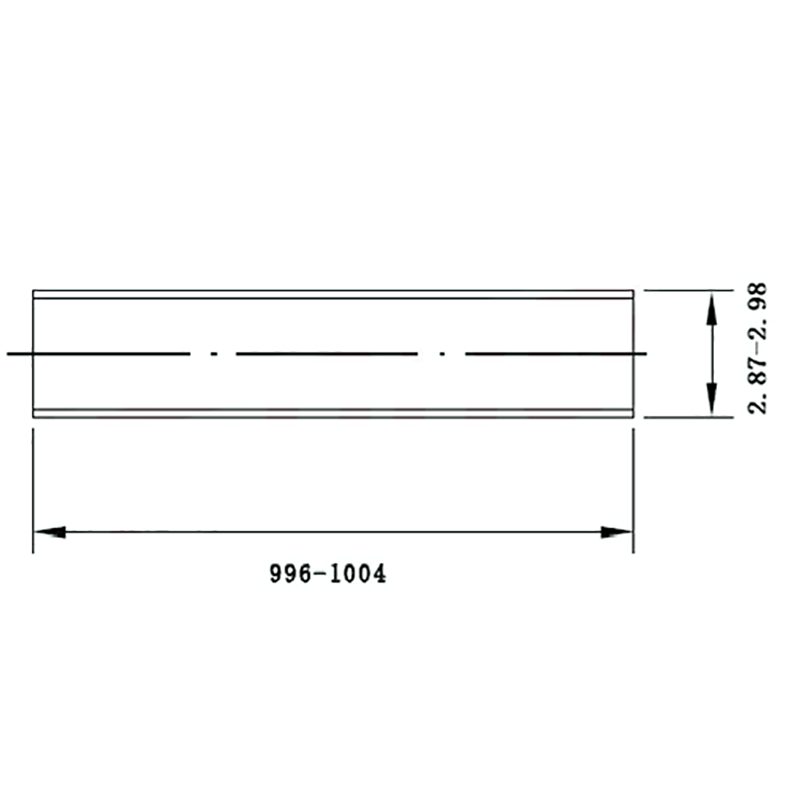
This fully threaded rod is produced from premium SUS316 stainless steel, a choice I prioritize over 304 (S30400) for environments with chlorides, acids, or elevated temperatures. While both are austenitic grades with similar chromium levels (18–20% vs 17–19%), the M3 SS316 stud bolt gains a decisive edge from its 2.0–3.0% molybdenum addition and slightly higher nickel content (10–14% vs 8–11%). Here is the engineering data that drives my specification:
1. Pitting and crevice corrosion resistance – In 3.5% NaCl at 25°C, ASTM G48 critical pitting temperature (CPT) tests show 15°C for 304 and 30°C for the M3 SS316 stud bolt. The pitting resistance equivalent number (PREN = %Cr + 3.3%Mo + 16%N) reaches 24–26 for SS316 versus only 18–19 for 304. A field case from an offshore wind turbine tower flange using an M20 SS316 stud bolt showed no rust after five years, whereas a prior 304 batch developed 0.3 mm deep pitting within 18 months.
2. Chloride stress-corrosion cracking (SCC) threshold – ASTM G123 testing reveals that 304 cracks within 50 hours in boiling 45% MgCl₂, while the SS316 stud bolt shows no cracking after 500 hours under identical conditions. In a petrochemical heat exchanger with ≈150 ppm Cl⁻ at 120°C, SS316 stud bolts remained intact after eight years of service; 304 bolts required full replacement at three years.
3. High-temperature strength and creep resistance – At 538°C, the ASME design allowable stress is 88 MPa for 304 versus 103 MPa for the SS316 stud bolt. The 1000-hour creep rupture strength at 538°C is 55 MPa for 304, but 75 MPa for the SS316 stud bolt. This makes it the preferred choice for chemical furnace tubes and steam-turbine glands operating between 450–600°C.
4. Acid-media corrosion resistance – In 5% H₂SO₄ at 80°C, the corrosion rate drops from 0.6 mm/a (304) to 0.1 mm/a for the SS316 stud bolt. In 1% acetic acid with 200 ppm Cl⁻, the rate is 0.18 mm/a for 304 and only 0.02 mm/a for the SS316 stud bolt – a critical advantage for pharmaceutical reactor flanges.
5. Low-temperature toughness – Both grades maintain Charpy impact values ≥100 J at –196°C, but the molybdenum in SS316 suppresses σ-phase precipitation, preventing embrittlement in long-term LNG pipeline service (–162°C) as verified by reinspection.
Engineering conclusion: When your operating environment contains Cl⁻ ≥50 ppm at temperatures ≥60°C, or involves acidic media and sustained stresses, the M3 SS316 stud bolt delivers three to five times the service life of 304. The 1000 mm natural-color rod offers high strength, is rust-free, and can be cut on demand into double-end stud bolts or fully threaded rods for flexible installation and maintenance-free operation. For procurement teams working with China suppliers, I recommend qualifying this stud bolt as your baseline for corrosive, high-temperature, or cryogenic applications – the total cost of ownership consistently favors the SS316 upgrade.
For detailed dimensional certifications or lot-specific test reports, contact your preferred China suppliers of stud bolts directly.
For detailed dimensional certifications or lot-specific test reports, contact your preferred China suppliers of stud bolts directly.
Send Message
