
Recommend Products
 Name: Fujian Monel 400 Double End Stud Material: Monel 400 Standard: ASME B18.2.1 Size: 5/16 to 4 inch Length: 30 to 1000 mm Class: 12.9 Feature: Resistant to hydrofluoric acidQS Fastener: Monel 400 Double End Stud
 Name: Inconel 625 Double End Stud Material: Inconel 625 Standard: ASME B18.2.1 Size: 5/16 to 4 inch Length: 30 to 1000 mm Class: 12.9 Feature: High Yield Strength, Durable Strength and Corrosion ResistanceQS Fastener: Inconel 625 Double End Stud
 Name: Xiamen Inconel 600 High Strength Fastener Material: Inconel 600 Standard: ASME Size: 5/16 to 4 inch Length: 30 to 1000 mm Class: 12.9 Feature: High Yield Strength, Durable Strength and Corrosion ResistanceQS Fastener: Inconel 600 High Strength Fastener
 Name: Inconel 600 Stud Bolt Putian Material: Inconel 600 Standard: ASME B18.2.1 Size: 5/16 to 4 inch Length: 30 to 1000 mm Class: 12.9 Feature: High Yield Strength, Durable Strength and Corrosion ResistanceQS Fastener: Inconel 600 Stud Bolt


M4 Stainless Steel 304 Thread Rod
QS Fastener: M4 Stainless Steel 304 Thread Rod
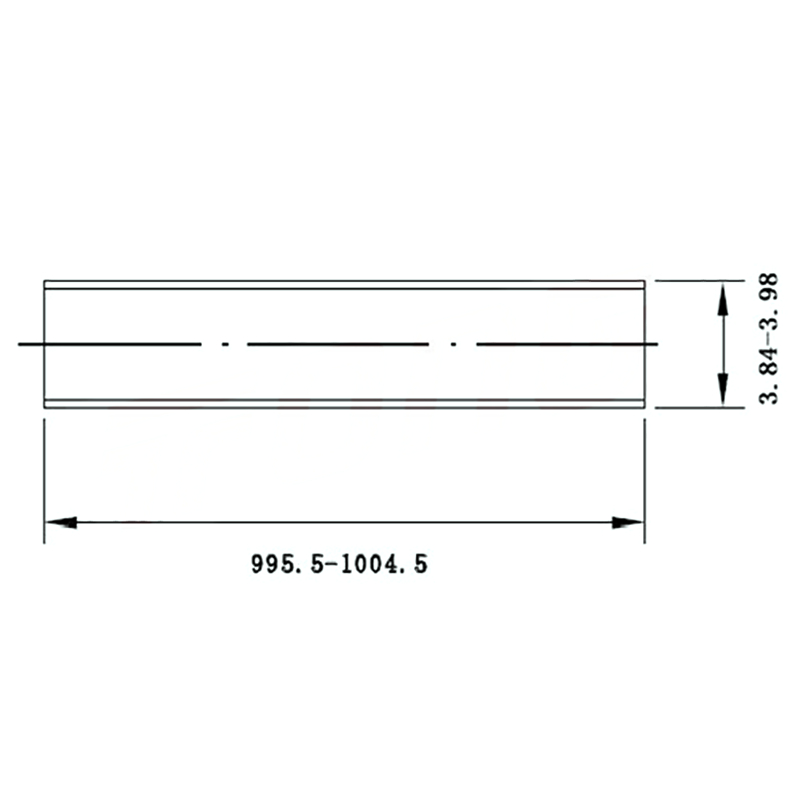
Name: M4 Stainless Steel 304 Thread Rod
Standard: DIN976
Material: SS304
Size: M4
Lenght: 1000mm
Surface: Natural color
Standard: DIN976
Material: SS304
Size: M4
Lenght: 1000mm
Surface: Natural color
Quantity
M4 Stainless Steel 304 Thread Rod, DIN 976, 1000 mm stock length, natural 304 finish.
Combines corrosion resistance with strength for damp, mildly acidic/alkaline and outdoor assemblies. Clean thread, excellent straightness, cut-to-length, ready for any matching nut. The cost-effective choice for jigs, PV brackets, kitchen & bath hardware, etc.
Combines corrosion resistance with strength for damp, mildly acidic/alkaline and outdoor assemblies. Clean thread, excellent straightness, cut-to-length, ready for any matching nut. The cost-effective choice for jigs, PV brackets, kitchen & bath hardware, etc.
Six-step installation of M4 Stainless Steel 304 Thread Rod – tighten once, re-work never.
1. Pick the right mating material
304/316 stainless is noble. If the potential difference to the partner part (steel, Al) exceeds 0.3 V, add an insulating sleeve or use a 316 washer to stop galvanic attack. In high-chlorine outdoor areas choose 316L and fit nuts of the same grade. When M4 Stainless Steel 304 Thread Rod is used as an extension or adjuster, every nut and washer must be 304 or better—no mixed-metal couples.
304/316 stainless is noble. If the potential difference to the partner part (steel, Al) exceeds 0.3 V, add an insulating sleeve or use a 316 washer to stop galvanic attack. In high-chlorine outdoor areas choose 316L and fit nuts of the same grade. When M4 Stainless Steel 304 Thread Rod is used as an extension or adjuster, every nut and washer must be 304 or better—no mixed-metal couples.
2. Prepare the contact surfaces
a) Remove burrs and weld spatter; Ra ≤ 12.5 µm.
b) Degrease with acetone or a chloride-free cleaner—never use “stainless pickling paste” that contains chloride or you plant the seeds of pitting.
c) If a seal is needed, brush fluororubber sealant on the outside of the thread only; do not fill all flutes or torque readings will be false.
For M4 Stainless Steel 304 Thread Rod, clamp the rod horizontally, polish lengthwise with 120# non-woven, then wipe once with anhydrous acetone to minimise micro-pits.
a) Remove burrs and weld spatter; Ra ≤ 12.5 µm.
b) Degrease with acetone or a chloride-free cleaner—never use “stainless pickling paste” that contains chloride or you plant the seeds of pitting.
c) If a seal is needed, brush fluororubber sealant on the outside of the thread only; do not fill all flutes or torque readings will be false.
For M4 Stainless Steel 304 Thread Rod, clamp the rod horizontally, polish lengthwise with 120# non-woven, then wipe once with anhydrous acetone to minimise micro-pits.
3. Lubrication – the line between “galled forever” and “easy after ten years”
Un-lubricated stainless threads seize under load. Coat the whole thread with anti-seize containing nickel or MoS₂ (-40–650 °C); torque coefficient drops ~25 %. Ordinary grease or oil is forbidden—they carbonise and lock the joint. After lubrication recalculate torque with K = 0.13 or you will over-tension and break the rod. Because M4 Stainless Steel 304 Thread Rod is small, root contact stress is high; spread a thin film on the first 2–3 entering threads to avoid heat-lock.
Un-lubricated stainless threads seize under load. Coat the whole thread with anti-seize containing nickel or MoS₂ (-40–650 °C); torque coefficient drops ~25 %. Ordinary grease or oil is forbidden—they carbonise and lock the joint. After lubrication recalculate torque with K = 0.13 or you will over-tension and break the rod. Because M4 Stainless Steel 304 Thread Rod is small, root contact stress is high; spread a thin film on the first 2–3 entering threads to avoid heat-lock.
4. Torque in three steps
a) Hand-run to centre; bolt-to-face angle ≤ 0.3°—tilt causes early fatigue even with a torque wrench.
b) Tighten 30 % - 70 % - 100 % in a cross-pattern; ≤ M8 use a torque driver, ≥ M10 use a click wrench.
c) Re-check within 5 min—prevent “false torque” from metal creep.
When M4 Stainless Steel 304 Thread Rod is used with adjustable brackets, stage-torque to 0.1 N·m, 0.25 N·m, 0.4 N·m cross-wise so the fine thread is not stripped.
a) Hand-run to centre; bolt-to-face angle ≤ 0.3°—tilt causes early fatigue even with a torque wrench.
b) Tighten 30 % - 70 % - 100 % in a cross-pattern; ≤ M8 use a torque driver, ≥ M10 use a click wrench.
c) Re-check within 5 min—prevent “false torque” from metal creep.
When M4 Stainless Steel 304 Thread Rod is used with adjustable brackets, stage-torque to 0.1 N·m, 0.25 N·m, 0.4 N·m cross-wise so the fine thread is not stripped.
5. Allow for thermal movement
Stainless expands ~1.5× more than steel; 0.2 mm stretch at 200 °C can cut preload 15 %. Hot flanges ≥ M12 need Inconel 718 disc springs for compensation. Outdoor trays installed in winter should be tightened to 110 % of nominal preload to leave summer margin. If M4 Stainless Steel 304 Thread Rod is used for PV stay-wires, 0.45 N·m in winter plus a 304 disc spring (OD 6 mm) will absorb a 30 °C day-night swing.
Stainless expands ~1.5× more than steel; 0.2 mm stretch at 200 °C can cut preload 15 %. Hot flanges ≥ M12 need Inconel 718 disc springs for compensation. Outdoor trays installed in winter should be tightened to 110 % of nominal preload to leave summer margin. If M4 Stainless Steel 304 Thread Rod is used for PV stay-wires, 0.45 N·m in winter plus a 304 disc spring (OD 6 mm) will absorb a 30 °C day-night swing.
6. Inspect and re-tighten
First re-torque within 24 h of loading, then every 500 thermal cycles or once a year. If rust is seen, measure chloride: >25 ppm means replace—never re-torque over rust. If disassembly is hard, use a penetrating release agent—no cheater bars or the female thread will be ruined. Inspect M4 Stainless Steel 304 Thread Rod with 10× magnification; red rust on the crest means brush with a stainless wire wheel and fit a new rod at once to stop crevice corrosion fed by chlorides.
First re-torque within 24 h of loading, then every 500 thermal cycles or once a year. If rust is seen, measure chloride: >25 ppm means replace—never re-torque over rust. If disassembly is hard, use a penetrating release agent—no cheater bars or the female thread will be ruined. Inspect M4 Stainless Steel 304 Thread Rod with 10× magnification; red rust on the crest means brush with a stainless wire wheel and fit a new rod at once to stop crevice corrosion fed by chlorides.
Remember: stainless is not “stain-never” but “stain-less”. Follow the six steps and you turn its corrosion resistance and high strength into zero-maintenance value over the full life cycle. Whether it is M4 Stainless Steel 304 Thread Rod or any larger size, correct material choice, clean lubrication and controlled torque let you tighten once—and forget.
Send Message
