
Recommend Products
 Name: Fujian Monel 400 Double End Stud Material: Monel 400 Standard: ASME B18.2.1 Size: 5/16 to 4 inch Length: 30 to 1000 mm Class: 12.9 Feature: Resistant to hydrofluoric acidQS Fastener: Monel 400 Double End Stud
 Name: Inconel 625 Double End Stud Material: Inconel 625 Standard: ASME B18.2.1 Size: 5/16 to 4 inch Length: 30 to 1000 mm Class: 12.9 Feature: High Yield Strength, Durable Strength and Corrosion ResistanceQS Fastener: Inconel 625 Double End Stud
 Name: Xiamen Inconel 600 High Strength Fastener Material: Inconel 600 Standard: ASME Size: 5/16 to 4 inch Length: 30 to 1000 mm Class: 12.9 Feature: High Yield Strength, Durable Strength and Corrosion ResistanceQS Fastener: Inconel 600 High Strength Fastener
 Name: Inconel 600 Stud Bolt Putian Material: Inconel 600 Standard: ASME B18.2.1 Size: 5/16 to 4 inch Length: 30 to 1000 mm Class: 12.9 Feature: High Yield Strength, Durable Strength and Corrosion ResistanceQS Fastener: Inconel 600 Stud Bolt


M4 SS316 Thread Rod
QS Fastener: M4 SS316 Thread Rod
Name: M4 SS316 Thread Rod
Standard: DIN976
Material: SS316
Size: M4
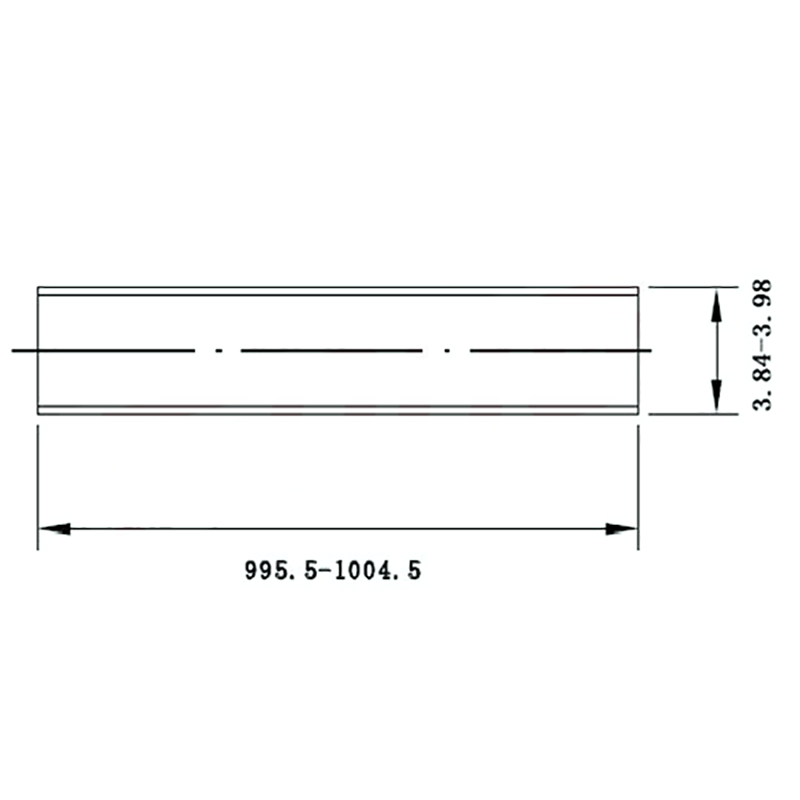
Lenght: 1000mm
Surface: Natural color
Standard: DIN976
Material: SS316
Size: M4
Lenght: 1000mm
Surface: Natural color
Quantity
M4 SS316 Thread Rod
Precision-rolled to DIN 976, one-piece 1 000 mm length, no welds. Marine-grade SS316 stainless steel resists chloride ions, acids, alkalis and elevated temperatures. Natural finish, no coating, greener choice. Widely used in coastal PV brackets, ship bulkheads, chemical-equipment columns and any other long-life corrosive environment. Can be cut to any length with a nut on site, cutting field inventory and installation cost. A cost-effective upgrade replacement for 304 and A2-70.
Precision-rolled to DIN 976, one-piece 1 000 mm length, no welds. Marine-grade SS316 stainless steel resists chloride ions, acids, alkalis and elevated temperatures. Natural finish, no coating, greener choice. Widely used in coastal PV brackets, ship bulkheads, chemical-equipment columns and any other long-life corrosive environment. Can be cut to any length with a nut on site, cutting field inventory and installation cost. A cost-effective upgrade replacement for 304 and A2-70.
Compared with 304, the edge of 316 stainless is concentrated in the “composition–performance–life” chain. Five points are summarised below, all verified on the representative size M4 SS316 Thread Rod.
1. Pitting-resistance equivalent raised by 35 %
M4 SS316 Thread Rod contains 2.0–3.0 % Mo. Using the PREN formula
PREN = %Cr + 3.3 × %Mo + 16 × %N
304: 18 %Cr → 18
M4 SS316 Thread Rod: 16 %Cr + 3.3 × 2.5 %Mo ≈ 24.25
PREN is about 35 % higher. In 3.5 % NaCl salt-spray at 35 °C per ASTM G48-11 the critical pitting temperature (CPT) of M4 SS316 Thread Rod is 34 °C; for 304 it is only 19 °C.
M4 SS316 Thread Rod contains 2.0–3.0 % Mo. Using the PREN formula
PREN = %Cr + 3.3 × %Mo + 16 × %N
304: 18 %Cr → 18
M4 SS316 Thread Rod: 16 %Cr + 3.3 × 2.5 %Mo ≈ 24.25
PREN is about 35 % higher. In 3.5 % NaCl salt-spray at 35 °C per ASTM G48-11 the critical pitting temperature (CPT) of M4 SS316 Thread Rod is 34 °C; for 304 it is only 19 °C.
2. Chloride stress-corrosion cracking (SCC) life one order of magnitude longer
In boiling 42 % MgCl₂ (143 °C) SCC test 304 cracks in 10–30 h; M4 SS316 Thread Rod survives beyond 300 h. Translated to seawater service the theoretical life rises from <5 years to >30 years.
In boiling 42 % MgCl₂ (143 °C) SCC test 304 cracks in 10–30 h; M4 SS316 Thread Rod survives beyond 300 h. Translated to seawater service the theoretical life rises from <5 years to >30 years.
3. High-temperature strength retention improved by 8–10 %
Instantaneous tensile test at 500–800 °C:
304: 515 MPa → ≈390 MPa (76 % retained)
M4 SS316 Thread Rod: 515 MPa → ≈440 MPa (85 % retained)
Lower risk of high-temperature relaxation in stack linings, automotive exhaust fasteners, etc., especially when M4 SS316 Thread Rod is selected.
Instantaneous tensile test at 500–800 °C:
304: 515 MPa → ≈390 MPa (76 % retained)
M4 SS316 Thread Rod: 515 MPa → ≈440 MPa (85 % retained)
Lower risk of high-temperature relaxation in stack linings, automotive exhaust fasteners, etc., especially when M4 SS316 Thread Rod is selected.
4. Upgraded biocompatibility and hygiene level
Ni release from 316L is <0.1 μg/cm²·week, below the 0.2 μg/cm² limit of ISO 10993-12 for implant devices; 304 gives 0.3–0.4 μg/cm² under the same conditions. FDA/CFDA therefore list the 316L base of M4 SS316 Thread Rod as Class-II or higher medical-grade material.
Ni release from 316L is <0.1 μg/cm²·week, below the 0.2 μg/cm² limit of ISO 10993-12 for implant devices; 304 gives 0.3–0.4 μg/cm² under the same conditions. FDA/CFDA therefore list the 316L base of M4 SS316 Thread Rod as Class-II or higher medical-grade material.
5. 15 % lower life-cycle cost
Although the July 2025 price of M4 SS316 Thread Rod is 1.5–2× that of 304 (304 ≈ CNY 16 000 t⁻¹, 316 ≈ CNY 24 000 t⁻¹), the annual corrosion-failure probability in coastal or chemical high-chloride service drops from 2 % for 304 to 0.1 % for 316. Counting replacement, downtime and maintenance, the 10-year total cost falls by about 15 %, making M4 SS316 Thread Rod the economical long-term choice.
Although the July 2025 price of M4 SS316 Thread Rod is 1.5–2× that of 304 (304 ≈ CNY 16 000 t⁻¹, 316 ≈ CNY 24 000 t⁻¹), the annual corrosion-failure probability in coastal or chemical high-chloride service drops from 2 % for 304 to 0.1 % for 316. Counting replacement, downtime and maintenance, the 10-year total cost falls by about 15 %, making M4 SS316 Thread Rod the economical long-term choice.
In short, the key alloying element molybdenum gives 316 a systematic advantage over 304 in chloride corrosion resistance, high-temperature strength, biological safety and long-term economy, making it the first choice for high-chloride or high-purity scenes such as coastlines, chemical plants, medical devices and PV brackets. With standardised dimensions M4 SS316 Thread Rod turns those advantages into a quantifiable, replaceable, warehouse-friendly engineering solution.
Send Message
