
Recommend Products
 Name: Fujian Monel 400 Double End Stud Material: Monel 400 Standard: ASME B18.2.1 Size: 5/16 to 4 inch Length: 30 to 1000 mm Class: 12.9 Feature: Resistant to hydrofluoric acidQS Fastener: Monel 400 Double End Stud
 Name: Inconel 625 Double End Stud Material: Inconel 625 Standard: ASME B18.2.1 Size: 5/16 to 4 inch Length: 30 to 1000 mm Class: 12.9 Feature: High Yield Strength, Durable Strength and Corrosion ResistanceQS Fastener: Inconel 625 Double End Stud
 Name: Xiamen Inconel 600 High Strength Fastener Material: Inconel 600 Standard: ASME Size: 5/16 to 4 inch Length: 30 to 1000 mm Class: 12.9 Feature: High Yield Strength, Durable Strength and Corrosion ResistanceQS Fastener: Inconel 600 High Strength Fastener
 Name: Inconel 600 Stud Bolt Putian Material: Inconel 600 Standard: ASME B18.2.1 Size: 5/16 to 4 inch Length: 30 to 1000 mm Class: 12.9 Feature: High Yield Strength, Durable Strength and Corrosion ResistanceQS Fastener: Inconel 600 Stud Bolt


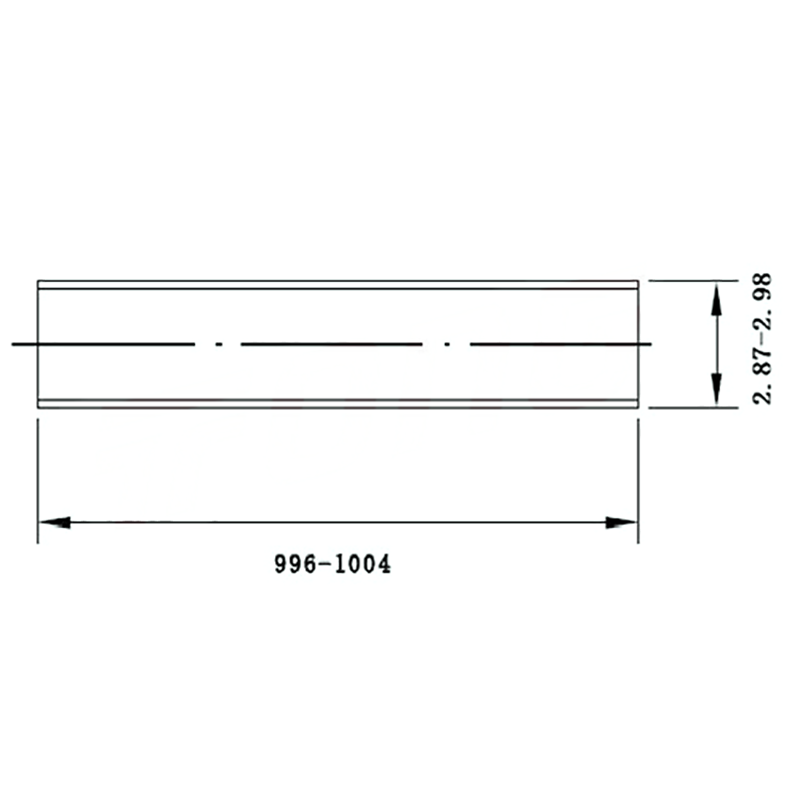
M3 Stainless Steel 304 Thread Rod, manufactured to DIN976, overall length 1000 mm, natural finish. It combines the corrosion resistance and strength of 304 stainless steel and is suitable for chemical, food and photovoltaic bracket applications. It can be cut to length and supplied with matching nuts; bulk stock ready for shipment within 24 hours.
“Pickling or electropolishing?”—this seemingly technical question has become the trending password in WeChat groups of curtain-wall designers, high-end bathroom brands and property owners. The reason is simple: once M3 Stainless Steel 304 Thread Rod and other 304 fasteners are used in coastal cities, the triple attack of salt spray, UV and acid rain can produce rust stains and water marks in as little as six months, immediately downgrading the “premium look” of the whole building or piece of equipment. Two camps have emerged:
• Pickling only—cheap, but the appearance will not last a year;
• Mirror electropolishing followed by pickling—costs 15 % more, yet claims to stay “stain-free for three years”.
• Pickling only—cheap, but the appearance will not last a year;
• Mirror electropolishing followed by pickling—costs 15 % more, yet claims to stay “stain-free for three years”.
Let’s break down the processes.
Pickling: essentially a chemical oxidation that dissolves free iron on the surface of M3 Stainless Steel 304 Thread Rod with nitric or citric acid, leaving a chromium-rich oxide film that lifts salt-spray life from 48 h to 200 h. However, it has no effect on surface roughness (Ra); chloride ions remain in microscopic pits and, over time, white spots appear.
Electropolishing: the M3 Stainless Steel 304 Thread Rod is made the anode in a phosphoric-sulfuric electrolyte; surface peaks dissolve preferentially, driving Ra below 0.1 µm and reflectance to ≥60 %, producing a visible mirror finish. More importantly, the leveling process removes microcracks and burrs, cutting chloride attachment area by over 80 %. A subsequent pickling step thickens the passive film from 2 nm to 5 nm, easily passing 1000 h salt-spray tests.
Coastal scenario—ISO 9223 C4 level, annual salt-spray deposition 60 mg/m²·d: traditionally pickled parts show 5 % rust spots after nine months, whereas M3 Stainless Steel 304 Thread Rod with the dual electropolish + pickle process shows only slight darkening at edges after 36 months of continuous exposure, meeting curtain-wall “maintenance-free” specifications.
Cost calculation: take M6×40 hex bolts in a 10 000-piece lot, base cost 0.42 CNY each.
• Pickling only: +0.02 CNY/pc, 200 h salt spray.
• Electropolish + pickle: +0.06 CNY/pc, 1000 h salt spray.
• Pickling only: +0.02 CNY/pc, 200 h salt spray.
• Electropolish + pickle: +0.06 CNY/pc, 1000 h salt spray.
Scaled to an entire façade (about 50 000 M3 Stainless Steel 304 Thread Rod), the total increase is 3 000 CNY, yet it saves one high-altitude cleaning cycle (coastal 2 CNY/m² × 5 000 m² = 10 000 CNY).
Therefore, the verdict is clear: for curtain walls and high-end kitchens and baths where “appearance is everything”, the 15 % premium not only pays off but is recouped after the first typhoon season.
Send Message
