
Recommend Products
 Name: Fujian Monel 400 Double End Stud Material: Monel 400 Standard: ASME B18.2.1 Size: 5/16 to 4 inch Length: 30 to 1000 mm Class: 12.9 Feature: Resistant to hydrofluoric acidQS Fastener: Monel 400 Double End Stud
 Name: Inconel 625 Double End Stud Material: Inconel 625 Standard: ASME B18.2.1 Size: 5/16 to 4 inch Length: 30 to 1000 mm Class: 12.9 Feature: High Yield Strength, Durable Strength and Corrosion ResistanceQS Fastener: Inconel 625 Double End Stud
 Name: Xiamen Inconel 600 High Strength Fastener Material: Inconel 600 Standard: ASME Size: 5/16 to 4 inch Length: 30 to 1000 mm Class: 12.9 Feature: High Yield Strength, Durable Strength and Corrosion ResistanceQS Fastener: Inconel 600 High Strength Fastener
 Name: Inconel 600 Stud Bolt Putian Material: Inconel 600 Standard: ASME B18.2.1 Size: 5/16 to 4 inch Length: 30 to 1000 mm Class: 12.9 Feature: High Yield Strength, Durable Strength and Corrosion ResistanceQS Fastener: Inconel 600 Stud Bolt


M3 SS316 Thread Rod
QS Fastener: M3 SS316 Thread Rod
Name: M3 SS316 Thread Rod
Standard: DIN976
Material: SS316
Size: M3
Lenght: 1000 mm
Surface: Natural color
Standard: DIN976
Material: SS316
Size: M3
Lenght: 1000 mm
Surface: Natural color
Quantity
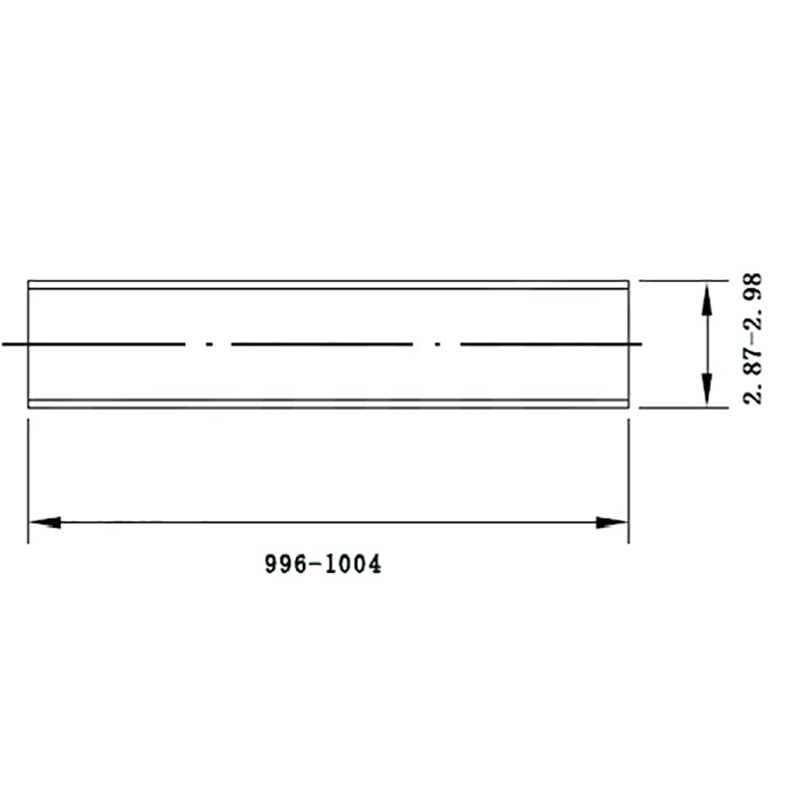
M3 SS316 Thread Rod is manufactured according to DIN976, using austenitic 316 stainless steel that resists acids, alkalis, and high temperatures. The 1000 mm bar is one solid piece without welds and has a plain finish; it can be cut to length for connections and positioning in chemical, marine, and precision equipment, offering quick installation and long-term maintenance-free use.
Use Precautions for M3 SS316 Thread Rod
1. Material Selection & Environment Matching
304 is suitable for dry indoor conditions; for marine, chemical, or high-salt-fog environments choose 316/316L and, if necessary, apply passivation or surface coatings.
Avoid direct contact with dissimilar metals such as carbon steel, copper, or aluminum to prevent galvanic corrosion; where contact is unavoidable, use insulating washers or coatings.
1. Material Selection & Environment Matching
304 is suitable for dry indoor conditions; for marine, chemical, or high-salt-fog environments choose 316/316L and, if necessary, apply passivation or surface coatings.
Avoid direct contact with dissimilar metals such as carbon steel, copper, or aluminum to prevent galvanic corrosion; where contact is unavoidable, use insulating washers or coatings.
If M3 SS316 Thread Rod is selected, it can be used directly in high-chloride environments, but the integrity of the passive film must still be checked.
2. Preventing Galling / Seizing
Before assembly, thoroughly clean the threads—especially the fine threads of M3 SS316 Thread Rod—removing chips and oil; use dedicated stainless steel lubricants (e.g., water-based wax, MoS₂) and avoid ordinary grease that dries quickly.
Tighten with a torque wrench in two crosswise passes at ≤20 rpm; single-stage rapid tightening is prohibited.
After tightening, 2–3 threads should protrude; excess length is prone to deformation, while too little risks thread stripping.
For small-diameter parts such as M3 SS316 Thread Rod, low-friction washers are recommended to reduce galling risk.
Before assembly, thoroughly clean the threads—especially the fine threads of M3 SS316 Thread Rod—removing chips and oil; use dedicated stainless steel lubricants (e.g., water-based wax, MoS₂) and avoid ordinary grease that dries quickly.
Tighten with a torque wrench in two crosswise passes at ≤20 rpm; single-stage rapid tightening is prohibited.
After tightening, 2–3 threads should protrude; excess length is prone to deformation, while too little risks thread stripping.
For small-diameter parts such as M3 SS316 Thread Rod, low-friction washers are recommended to reduce galling risk.
3. Installation & Protection Details
Mounting surfaces must be flat and clean; add flat and spring washers at high temperatures or under vibration to spread loads and prevent loosening.
After outdoor or humid-area work, immediately remove mud and salt; once dry, coat M3 SS316 Thread Rod with rust-preventive oil or wrap it with a protective film.
Store and transport in a dry condition, individually bagged to avoid impact damage to the passive film; cartons of M3 SS316 Thread Rod should be laid horizontally to prevent bending.
Mounting surfaces must be flat and clean; add flat and spring washers at high temperatures or under vibration to spread loads and prevent loosening.
After outdoor or humid-area work, immediately remove mud and salt; once dry, coat M3 SS316 Thread Rod with rust-preventive oil or wrap it with a protective film.
Store and transport in a dry condition, individually bagged to avoid impact damage to the passive film; cartons of M3 SS316 Thread Rod should be laid horizontally to prevent bending.
4. Routine Inspection & Maintenance
Establish a periodic inspection schedule: check for looseness, corrosion, or cracks; replace immediately if thread damage or galling is found.
Do not reuse high-strength stainless bolts once removed, as micro-deformation of the threads can lead to failure when reinstalled.
Where M3 SS316 Thread Rod is used in large quantities, set up a traceable numbering system to record torque values and replacement intervals.
Establish a periodic inspection schedule: check for looseness, corrosion, or cracks; replace immediately if thread damage or galling is found.
Do not reuse high-strength stainless bolts once removed, as micro-deformation of the threads can lead to failure when reinstalled.
Where M3 SS316 Thread Rod is used in large quantities, set up a traceable numbering system to record torque values and replacement intervals.
5. Special Service Conditions
High-temperature equipment: allow bolts to cool to room temperature before disassembly to avoid thermal seizing; for continuous service ≥400 °C, switch to high-temperature alloys.
High-temperature equipment: allow bolts to cool to room temperature before disassembly to avoid thermal seizing; for continuous service ≥400 °C, switch to high-temperature alloys.
Strong corrosive media: regularly replenish lubricants or upgrade to higher-Mo alloys such as 316Ti or 904L; cathodic protection may also be applied.
When M3 SS316 Thread Rod is used under alternating acid/alkali conditions, shorten inspection intervals to once a month to detect pitting at an early stage.
In short, proper material selection, correct installation, and regular maintenance are the real secrets to keeping stainless steel bolts—including M3 SS316 Thread Rod—forever tight and forever rust-free.
Send Message
