
The Versatility and Strength of Hexagonal Head Jack Screws
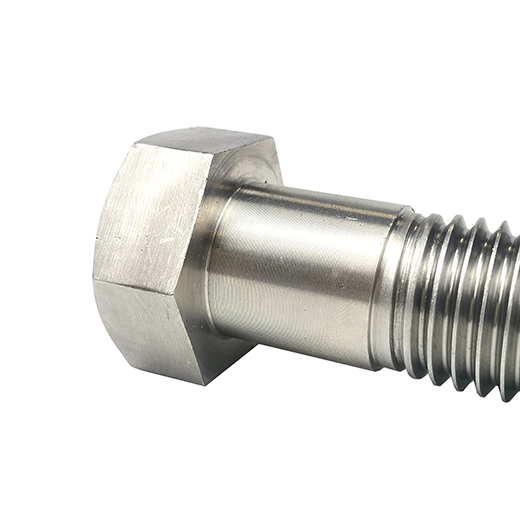
Hex head cap screws and jack screws are different parts: one clamps a joint, the other raises or positions a load, and swapping them brings wrong preload and the wrong standard into the assembly. This guide separates the two terms, explains what ASTM A320 B8M Class 2 qualifies for low-temperature bolting, and lists the assembly rules that keep flange gaskets tight in the cold.
Jack Screw and Cap Screw Are Not Interchangeable
A jack screw — a levelling or adjusting screw — is a threaded element that raises, lowers or positions a load. It carries compressive force along its axis against a pad, a foot or a mating thread. Its job is movement.
A hex cap screw is a clamping fastener: a hexagonal head with an integral washer face, a partially threaded shank and a preload developed across the joint. Its job is to hold two parts together.
- Function — the jack screw moves and levels; the cap screw clamps and preloads the joint.
- Head and bearing face — a cap screw to ASME B18.2.1 carries a washer face under the head; many jack screws have no defined bearing face.
- Threading — a cap screw has a specified thread length with plain shank left to bear in the hole; a jack screw is often threaded end to end.
- Substitution risk — cap screws cannot level a load, and jack screws give no defined preload, so a swap fails in both directions.
One more line is worth drawing: a hex bolt may be fully threaded and carries no washer-face requirement, so it is not a drop-in substitute for a hex cap screw in a joint designed to ASME B18.2.1.
What ASTM A320 B8M Class 2 Covers
ASTM A320 is the specification for alloy and stainless steel bolting for low-temperature service. It exists because cold shifts the failure mode from ductile overload to sudden brittle fracture.
- B8M — the 316 stainless grade within A320, with the modified carbon content that protects grain boundaries against corrosion.
- Class 2 — a carbide solution treatment on the finished fastener that reduces intergranular failure risk and improves low-temperature toughness.
- Class 1 — the solution-annealed condition without that extra step.
- Impact testing — A320 requires it at the specified low temperature; the class shows how the requirement is met.
Ordering plain "316 bolts" without the A320 designation buys hardware that may be perfectly good at ambient temperature and still unqualified for the cold duty it goes into.
Why Cold Service Changes the Rules
Steel actually gains tensile and yield strength as temperature falls; what it loses is toughness — the ability to absorb energy without cracking. Austenitic grades such as 316 avoid the sharp ductile-to-brittle transition of carbon steel, which is why A320 B8M is a common cold-service choice, verified by impact test rather than assumed.
Low-temperature fasteners show up where the cold is real:
- Cryogenic process plants — pipe flanges and supports in LNG and liquid nitrogen systems where carbon steel bolting turns brittle.
- Refrigeration and cold storage — ammonia and CO2 circuits whose joints must survive repeated thermal cycling.
- Outdoor structures in cold climates — winter drops ambient-rated fasteners below their qualified range.
- Warm-commissioned equipment run cold — thermal contraction shifts the preload, and the assembly procedure must allow for it.
Preload does not disappear in the cold; it moves. Fastener and clamped parts contract by different amounts, lubricants stiffen and change the friction assumed in the torque, and stainless threads remain prone to galling — follow the torque table for the cold case and tighten slowly.
Selection, Inspection and Reuse
Cold service often pairs with wet, saline or chemical exposure, so the material must qualify twice over: impact toughness at the service temperature and corrosion resistance in the medium.
- Marking and traceability — an A320 B8M part should be identifiable and its class traceable on the certificate.
- Damage inspection — check the head bearing face and the thread root, where load concentrates after over-torque.
- No reuse — bolts from a thermally cycled joint carry unknown preload history and a deformed thread; replace them.
- Chloride duty — where chlorides and cold meet on wetted parts, step up to a duplex grade that is itself qualified for the temperature.
Right part, right class, right torque — that trio is what keeps low-temperature bolted joints leak-free and intact.
Frequently Asked Questions
What is the difference between a jack screw and a hex cap screw?
A jack screw raises, levels or positions a load and carries compressive force along its axis; a hex cap screw clamps two parts and develops preload across a joint. They are not substitutes.
What does ASTM A320 B8M Class 2 mean?
A320 is the low-temperature bolting specification, B8M is the 316 stainless grade, and Class 2 adds a carbide solution treatment for toughness and intergranular resistance at low temperature. The part must also pass the specified impact test.
Why not just use ordinary 316 bolts in cold service?
Ordinary 316 hardware may meet the strength requirement but is not qualified for low-temperature toughness. A320 requires impact testing at the service temperature before brittle fracture can be ruled out.
Can low-temperature bolts be reused after a joint is opened?
No — the preload history is unknown, the thread has been deformed by the nut, and a new fastener is trivial in cost against a cold-service leak.
PTFE Gasket Application Benefits and Leading Chinese Manufacturer
PTFE Filler Spiral Wound Gasket-High-Performance Sealing Solutions for Demanding Applications
Related Article


