
Stop Guessing: The Ultimate Cheat Sheet for Reading Flange Markings
author: www.qishine.com
2026-02-27

One-Minute Overview
- What is the difference between Class 150 and PN16?
- Class 150 is an American standard pressure rating (ASME), while PN16 is a European standard (EN).
- Check the pressure class (e.g., Class 600 or PN100) and the flange type (e.g., Welding Neck or RTJ facing) are typically used for high-pressure systems.
- European PN Series: PN6, PN10, PN16, PN25, etc.
Flange Markings in 60 Seconds:
Standard & Class → ASME (Class 150/300) or EN (PN10/16)?
Type & Face → WN for extreme conditions, SO for general; RF for most, RTJ for dangerous fluids.
Material & Heat No. → A105 vs. 316L; Heat No. = traceability.
Size → DN/NPS + BCD = installation fit.
Decoding the "ID Card" on Flanges: Reading the Secrets of Industrial Piping from Their Markings
In the intricate world of industrial piping systems, flanges act as crucial "joints," responsible for connecting, sealing, and supporting components. Yet, the dense array of markings, symbols, letters, and numbers on flanges often causes confusion—what key information lies behind them? Mastering the interpretation of flange markings is not only an essential skill for professionals but also a fundamental requirement for ensuring the safe and efficient operation of piping systems. This article will guide you step-by-step in cracking the code of flange markings.
1. Company Logo: Tracing the Manufacturing Source
The manufacturer's logo or trademark on a flange is the starting point for tracing product quality responsibility. It represents the company's reputation and quality control standards. During procurement or maintenance, opting for products from reputable brands with clear markings adds an extra layer of security to the system.

Flange Marking: Logo, Standard, Flange Type, Size, Pressure, Sealing face Type, Material, Heat Number
2. Standard Code: The Universally Understood Technical Language
The standards a flange adheres to form the foundation of its technical specifications. The most common standards include:
American Standard System: ASME/ANSI B16.5 (common pressure ratings and dimensions), such as the ASME B16.5 BL Flange, and API 6A (oil and gas wellhead equipment)
European Standard System: EN 1092-1 (common in Europe), DIN (German standard)
Other Important Standards: JIS (Japanese standard), GB/T (Chinese national standard)
The standard code is typically located near the logo and indicates the technical specifications governing the flange's dimensions, pressure ratings, facing types, etc.
WhatsApp: +86 15985833169
3. Flange Type: Structure Determines Application
Flange type is usually indicated by abbreviations or symbols. Common types include:
- WN (Welding Neck Flange): For high-pressure and high-temperature applications.
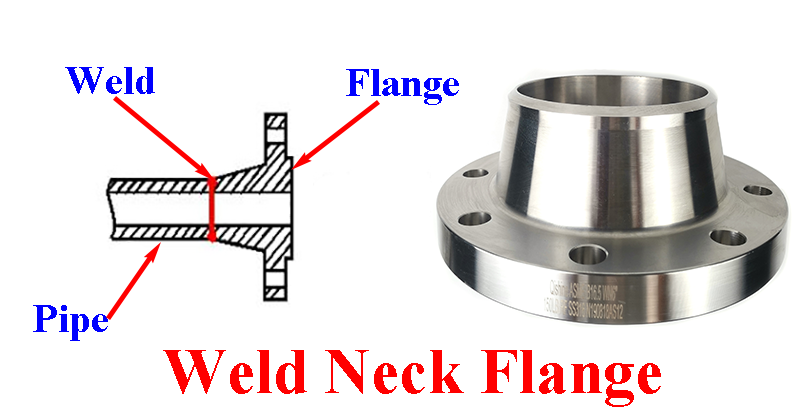
Weld Neck Flange
- SO (Slip-On): Easy to install; used for medium to low pressure.
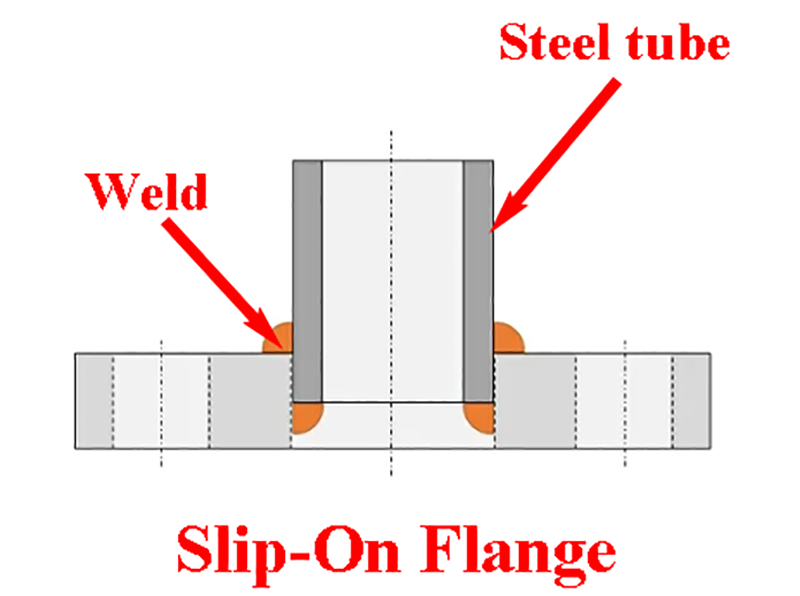
Slip On Flange
- BL (Blind): Used to seal the end of a piping system.
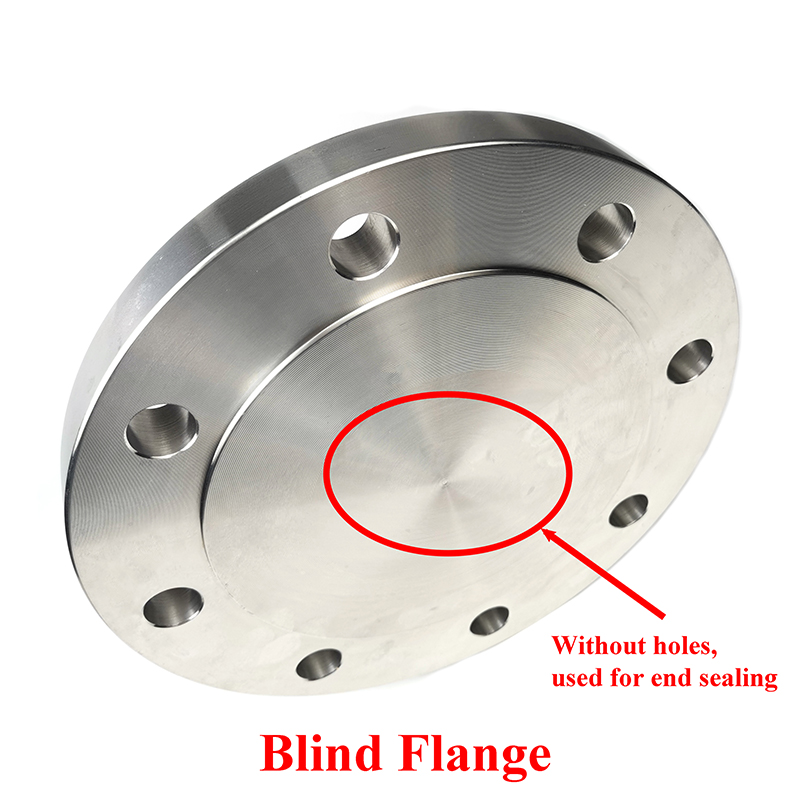
Blind Flange: without holes, used for end sealing
- THD (Threaded): Connects to the pipe via threads.
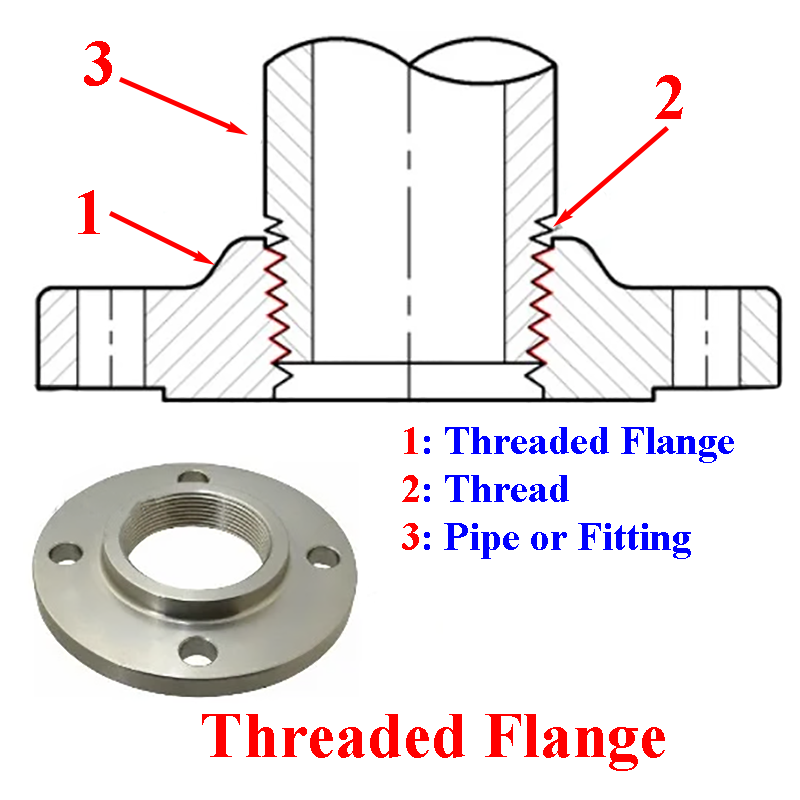
Threaded Flange
- LJ (Lap Joint): Used with a stub end.
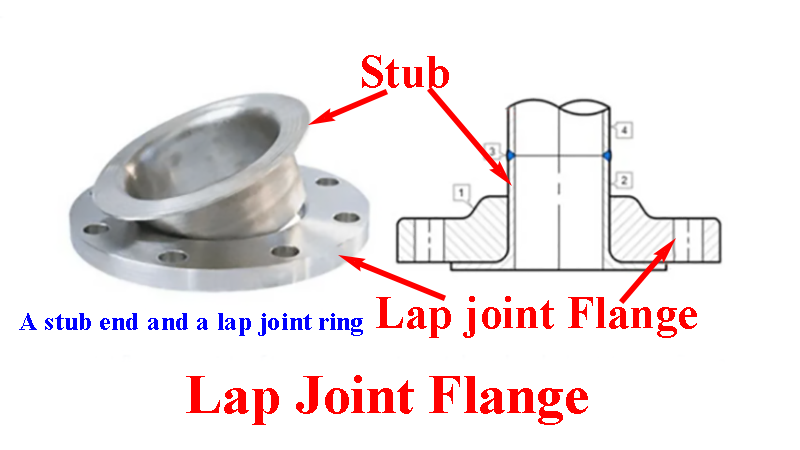
Lap Joint Flange: A stub end and a lap joint ring
- SW (Socket Weld): Socket weld flange,Suitable for high-pressure and high-temperature environments.
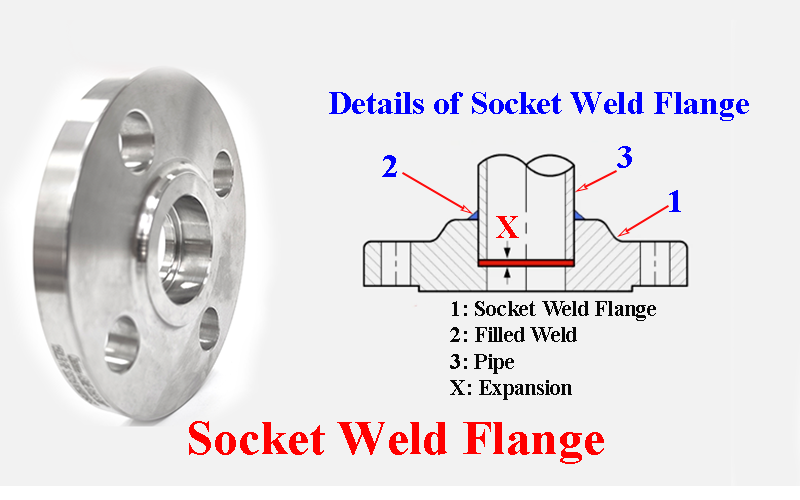
Socket Weld Flange
4. Size Parameters: Deciphering DN and OD
Size markings typically include:
- Nominal Diameter: e.g., DN150, NPS 6″, representing the universal size for the piping system.
- Outside Diameter and Thickness: Some flanges may indicate the actual OD and center thickness.
- Bolt Hole Information: Includes number of holes, hole diameter, and bolt circle diameter (BCD).
5. Pressure Rating: A Critical Safety Indicator
The pressure rating marking is vital. Common systems include:
- American Class Series: Class 150, 300, 600, 900, etc. The number represents pressure-bearing capacity (in psi) at ambient temperature.
- European PN Series: PN6, PN10, PN16, PN25, etc. The number represents the nominal pressure in bar.
Note: Pressure rating is closely related to flange material and operating temperature. It must be used in conjunction with the standard temperature-pressure rating tables.
6. Facing Type: Key to Leakage Prevention
The flange facing marking determines its sealing performance and the type of gasket required:
- FF (Flat Face): For low-pressure, non-hazardous media.
- RF (Raised Face): The most common type, used with soft gaskets.
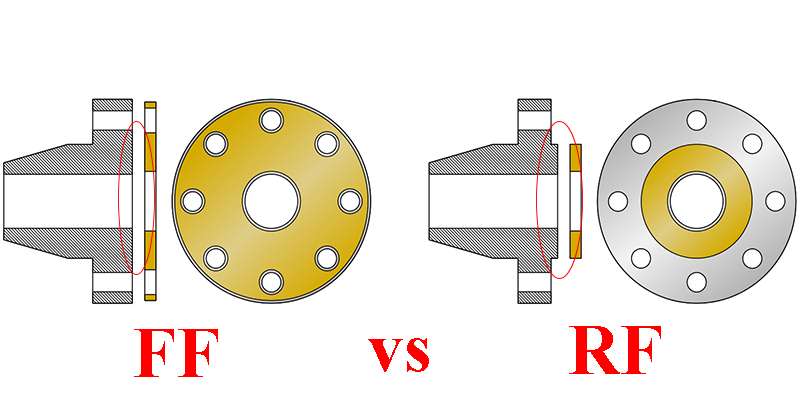
Comparison between FF Flange and RF Flange
- RTJ (Ring Type Joint): For high-pressure and high-temperature applications.
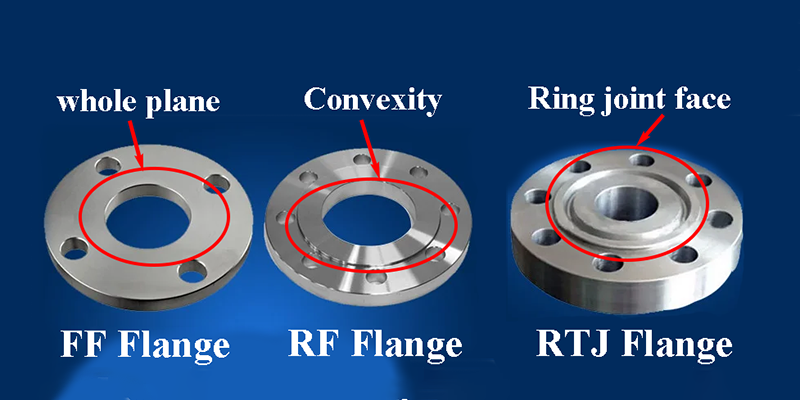
FF Flange VS RF Flange VS RTJ Flange
- TG (Tongue and Groove): For media prone to leakage.

Tongue & Groove Face (T & G)
7. Material Identification: Assurance of Corrosion Resistance and Strength
Material codes indicate the manufacturing material of the flange. Common ones include:
- Carbon Steel Series: A105 (forged carbon steel), WCB (cast carbon steel)
- Stainless Steel Series: 304/L, 316/L, 321 (corrosion-resistant, high-temperature)
- Alloy Steel Series: F11, F22 (high-temperature and high-pressure resistant)
- Special Materials: Monel, Inconel (resistant to extreme corrosion)
Material selection must be based on media characteristics, temperature, pressure, and environmental factors.
8. Heat Number / Lot Number: The Lifeline for Quality Traceability
The Heat Number or Lot Number is a unique identifier for material traceability. It can be used to query:
- The production batch of the raw material
- Chemical composition test reports
- Mechanical property test data
- Heat treatment records
During quality audits or incident analysis, the heat number is an indispensable traceability clue.
Conclusion: Small Markings, Significant Responsibility
Although small, the markings on a flange are an information hub connecting safety, efficiency, and responsibility. Mastering their interpretation means you can:
1. Select Accurately: Choose the correct flange specifications based on operating conditions, avoiding mismatches.
2. Assess Safety: Evaluate usage risks through pressure and material markings.
3. Troubleshoot Quickly: Rapidly identify component parameters during maintenance, minimizing downtime.
4. Trace Responsibility: Pinpoint supply chain links through the logo and heat number.
There are no small matters in industrial safety. Whether you are an engineer, procurement specialist, or field operator, developing the professional competence to "read and identify markings" is a responsibility to your work and a commitment to safety. It is recommended to build a library or database of flange markings in daily work, accumulating experience to ensure every connection is reliable and every marking is clear.
FAQ
Q1: What does "RF" mean on a flange marking?
A: RF stands for Raised Face. It is the most common sealing face type, used with soft gaskets for general industrial applications.
Q2: What is the difference between Class 150 and PN16?
A: Class 150 is an American standard pressure rating (ASME), while PN16 is a European standard (EN). They are close in pressure capacity but not interchangeable due to different dimensional standards.
Q3: Why is the Heat Number important on a flange?
A: The Heat Number is the traceability code for the raw material. It allows you to look up chemical composition and mechanical test reports for quality audits.
Q4: How do I know if a flange is for high pressure?
A: Check the pressure class (e.g., Class 600 or PN100) and the flange type (e.g., Welding Neck or RTJ facing) are typically used for high-pressure systems.
Q5: What does "WN" stand for?
A: WN stands for Welding Neck Flange, characterized by a long tapered hub for high-stress, high-temperature applications.
Qishine is ideal choice for EPC companies and project contractors.
WhatsApp: +86 15985833169
FAQ
Standard & Class → ASME (Class 150/300) or EN (PN10/16)?
Type & Face → WN for extreme conditions, SO for general; RF for most, RTJ for dangerous fluids.
What is the minimum order quantity for spiral wound gaskets?
Standard sizes are available from one piece. Non-standard diameters, special winding materials and customised ring combinations are quoted individually, so the minimum follows the specification.
How long does production usually take?
Routine production is normally finished within 30 days. The schedule depends on quantity, winding material and ring type, and available stock can be dispatched without delay.
What payment methods are accepted?
Common international methods such as T/T and L/C are both acceptable. The exact terms are fixed with the quotation for the specific order.
FF RF or RTJ Choose the Right Flange Face or Pay the Price Later
How to Choose the Marking Method for Fasteners
Related Article

Insights from a Case Study on Exporting B8M Fasteners.Recently, during our final outgoing inspection of a batch of B8M stainless steel fasteners destined for Portugal, we discovered varying degrees of burrs on the edges of the bolt hex heads.
How to Efficiently Remove Burrs from Bolt Edges

Insulating Gasket Procurement Pitfalls: From "Price Traps" to "Supplier Selection"
What pitfalls should you watch out for when purchasing insulating gaskets

As a classic modified PTFE gasket material from Garlock, Gylon 3500 is widely used in petrochemical, chemical, and other industries for its excellent resistance to strong acids, solvents, and anti-creep properties.
How to Buy Genuine Gylon 3500 Insulating Gaskets at Competitive Prices in China

