
Application cases of nickel-based alloy Incoloy 901 fasteners in the oil and gas industry

Incoloy901 is a nickel-based alloy containing molybdenum and copper. It has excellent hot and cold processing properties and high temperature strength. It is widely used in gas turbines, rotors and other components. It has high thermal stability and oxidation resistance and is suitable for use in high temperature environments.
What is Incoloy901?
The chromium content in the nickel-based alloy Incoloy 901 is usually 11.0-14.0%, and the nickel content is 40.0-45.00%. Incoloy 901 alloy is a nickel-based alloy containing molybdenum and copper, with good hot and cold processing properties.
Incoloy901 is an austenitic age-hardening alloy based on Fe-43Ni-12Cr, with the addition of titanium, aluminum and equivalent strengthening elements, containing a small amount of boron and lower carbon. It is a metastable γ" [Ni3 (Ti, Al)] phase dispersion strengthened, and a small amount of aluminum can inhibit the transformation of γ" to η-Ni3Ti phase.
Incoloy901 alloy has high yield strength and endurance strength below 650℃, good oxidation resistance below 760℃, and stable organization after long-term use. This alloy is a relatively mature alloy developed in the early stage.
Incoloy 901 Chemical composition
| Alloy | % | Ni | Al | Cu | Fe | Ti | Co | Mn | S | C | Si | P | Cr | Mo | B |
|
Incoloy 901 |
Min | 40 | REM | 2.35 | 11 | 5.0 | 0.01 | ||||||||
| Max | 45 | 0.35 | 0.5 | 3.1 | 1 | 1 | 0.03 | 0.1 | Si | 0.03 | 14 | 7.0 | 0.02 |
Physical properties of Incoloy 901
|
Density |
8.14 g/cm3 |
|
Melting point |
1280-1345 ℃ |
Incoloy 901 Mechanical properties
|
Alloy and state |
Tensile strength Rm N/mm2 |
Yield Strength RP0.2 N/mm2 |
Elongation A5 % |
|
Incoloy 901 |
1034 | 689 | 12 |
Key Applications in the Oil and Gas Industry
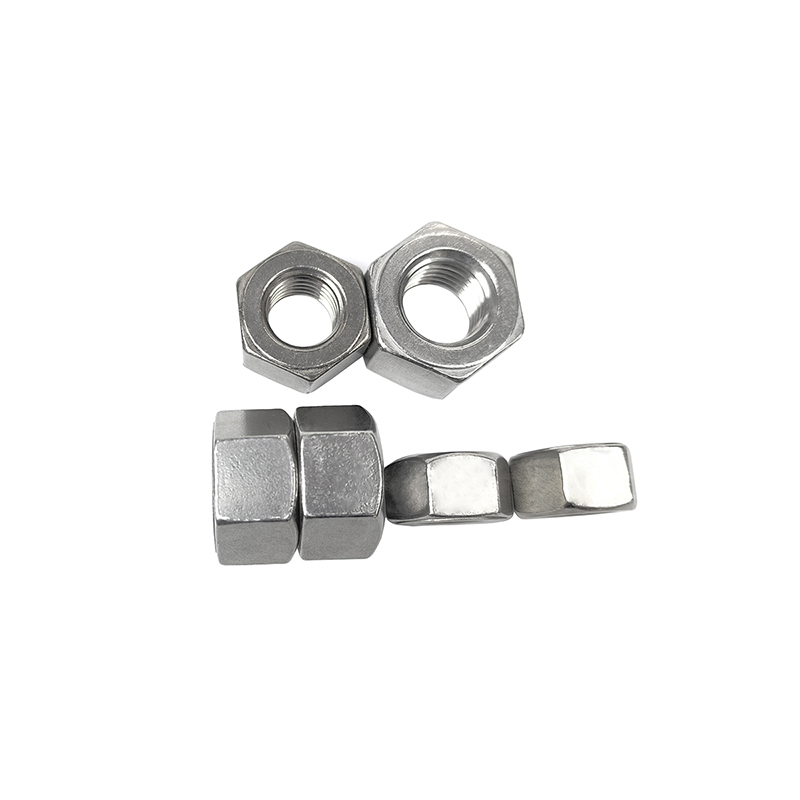
In the oil and gas industry, Incoloy 901 fasteners are often used in the following applications:
Wellhead Equipment: Due to its corrosion resistance, Incoloy 901 is widely used in wellhead equipment to resist the corrosive effects of oil and gas.
Processing system: This alloy can be used to manufacture pipe connections in the processing and transportation of liquids and gases to ensure long-term stable operation in high temperature and corrosive environments.
Facility Components: The high temperature resistance of Incoloy 901 makes it particularly suitable for the manufacture of critical information components such as valves, pipes and pressure vessels in oil refining and natural gas processing facilities.
How is Incoloy 901 tested for corrosion resistance?
The corrosion resistance testing of Incoloy 901 usually adopts a variety of methods to ensure the performance of the material under different environmental conditions. The following are some commonly used test methods and processes:
1. Accelerated corrosion testing
In a laboratory environment, accelerated corrosion testing is performed using corrosive media to test the Incoloy 901 material under conditions that are more severe than the actual use environment, thereby accelerating the corrosion process. This method usually includes:
Salt spray test: The alloy samples are placed in a salt spray chamber to simulate the corrosion conditions of marine or industrial environments and evaluate the corrosion resistance in chloride environments.
Acid/Alkaline Immersion Test: Alloy samples are immersed in acid or alkaline solutions of different concentrations to test their resistance to general corrosion and stress corrosion cracking.
2. Electrochemical testing
This type of test evaluates the corrosion resistance of an alloy by monitoring its electrochemical reaction in a specific electrolyte. Common methods include:
Polarization curve test: By measuring the potential that changes with current density and drawing an electrochemical polarization curve, the corrosion behavior and passivation characteristics of the alloy can be studied.
Electrical Impedance Spectroscopy (EIS): Testing the electrical impedance of alloy materials at different frequencies can obtain the corrosion rate and protection characteristics of the material.
3. Long-term immersion test
This test method immerses Incoloy 901 samples in real-world corrosive media for long periods of time, such as the liquids and gases that may be exposed during oil and gas production. This method can provide data on the material's performance over time under actual production conditions.
4. Mechanical properties test
After the corrosion test, mechanical property tests are also carried out to evaluate the effect of corrosion on the strength of the material, including:
Tensile Test: Measures the yield strength and elongation of alloy materials.
Impact Testing: Determines the toughness and resistance to brittleness of a material at elevated temperatures.
How to choose nickel-based alloy fasteners in different environments
Performance and application of nickel-based alloy Incoloy 825 fasteners
Related Article


