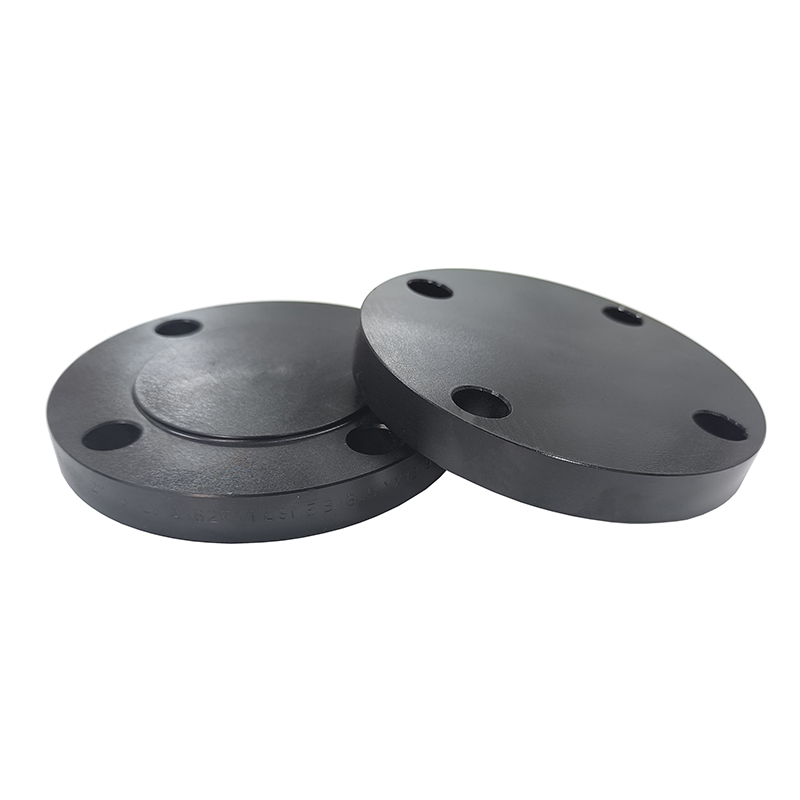
How to Determine the Quality of Flanges
author: www.qishine.com
2025-04-12
Basic Standards for Flange Quality Assessment
Flanges, as essential connecting components in pipeline systems, directly impact the sealing and safety of the entire system. Evaluating Metal Pipe Flange quality requires a comprehensive consideration of multiple factors, including material selection, manufacturing processes, dimensional accuracy, and surface treatment.
In industries such as petroleum and chemicals, the quality of flanges can even affect production safety and environmental protection. A high-quality flange should have a smooth surface, free from defects such as scratches and cracks, and its sealing surface should be free from burrs, scratches, and other imperfections that could compromise sealing performance. Additionally, flange materials must comply with relevant standards and possess corresponding quality certification documents to ensure they can withstand expected working conditions.
In practical applications, flange quality assessment requires rigorous testing across multiple dimensions, including material, dimensions, surface, mechanical properties, sealing performance, and non-destructive testing. Only through comprehensive evaluation can it be determined whether a flange meets design requirements and performance standards.
Raw Material and Material Identification
The choice of material significantly influences the performance and lifespan of flanges. Common flange materials include carbon steel, stainless steel, and alloy steel, each with specific advantages, disadvantages, and suitable applications. For example, 304 stainless steel flanges offer good corrosion resistance and machinability, making them suitable for general corrosive environments and temperatures up to 400°C. In contrast, 316 stainless steel flanges, with added molybdenum, exhibit significantly improved resistance to pitting and crevice corrosion, making them ideal for chloride-rich environments such as seawater and chemical media. When selecting flange materials, factors such as medium characteristics (including corrosivity and chloride content), temperature conditions, pressure ratings, and economic considerations must be taken into account.
Material identification can be performed using methods such as metallographic analysis and chemical composition analysis to verify compliance with standards. A simple way to judge material quality is through price comparison; prices significantly lower than market rates often indicate compromised quality. Additionally, hardness testing is a crucial method for material assessment, using relevant instruments to ensure the material meets required hardness standards. High-quality flanges should be made from premium carbon structural steel, offering high strength, good plasticity and toughness, and excellent machinability.
Manufacturing Processes and Quality Control
The manufacturing process has a decisive impact on the final quality of flanges. Current flange manufacturing processes mainly include casting, forging, cutting, and rolling. Cast flanges can produce complex shapes at lower costs but may have casting defects. Forged flanges, on the other hand, have uniform internal structures and are less prone to defects such as pores and inclusions, typically offering superior mechanical properties compared to cast flanges. The forging process generally involves selecting high-quality steel billets, heating, forming, and post-forging cooling. Both free forging and die forging have differences in production efficiency and precision, and the appropriate method should be chosen based on the size of the forging and production volume.
High-quality flange manufacturing requires strict control over material selection, manufacturing processes, surface treatment, and quality inspection to ensure compliance with industry standards. Issues during manufacturing, such as improper forging processes, can lead to coarse or uneven grains and hardening cracks. Therefore, reputable flange manufacturers follow stringent quality control processes, adhering to technical conditions and standard specifications to ensure product quality meets requirements.

Dimensional Accuracy and Surface Treatment EvaluationThe dimensional accuracy of flanges directly affects their compatibility with pipeline systems and sealing performance. When assessing flange quality, dimensional measurement tools (such as calipers and vernier calipers) should be used to check parameters like outer diameter, inner diameter, hole spacing, and bolt hole dimensions to ensure they meet standard specifications. This is particularly critical for components like the Welding Neck Pipe Flange, where dimensional deviations may result from improper temperature control or insufficient mold precision during manufacturing, significantly impacting installation and performance. Precision measurement tools such as coordinate measuring machines (CMM), vernier calipers, and micrometers are typically used for dimensional accuracy evaluation.
Surface treatment quality is also a critical aspect of flange quality assessment. Flange surfaces should be smooth, free from forging defects such as scratches and cracks, and casting surfaces should be free from sand, oxide scale, and other impurities. Machined surfaces should not have burrs, harmful scratches, or other defects that could reduce flange strength and connection reliability.
For ring joint flanges, the sealing surfaces should be individually inspected, and the groove sides should be free from machining-induced cracks, scratches, and impact damage. Improper surface treatment can lead to corrosion, leakage, and other issues, severely affecting flange lifespan. Therefore, surface treatment standards and quality are essential factors in flange quality evaluation.
Flange Quality Inspection Standards and Methods
Flange quality inspection requires adherence to a series of standards and methods to ensure compliance with design and usage requirements. Common inspection items include dimensional inspection, material inspection, surface quality inspection, mechanical property testing, sealing performance testing, and pressure rating testing.
Dimensional inspection ensures flange specifications meet design requirements, while material inspection verifies the chemical composition of flange materials against standards.
Surface quality inspection checks for defects such as scratches, burrs, and cracks to ensure surface quality meets standards.
Mechanical property testing evaluates flange load-bearing capacity and pressure resistance, while sealing performance testing ensures effective leakage prevention.
Non-destructive testing is also a crucial method for flange quality inspection, using techniques such as ultrasonic and magnetic particle testing to detect internal defects like cracks and inclusions, ensuring overall flange integrity.
Pressure rating testing involves applying specific pressures to test flange sealing performance and pressure resistance, ensuring no leakage or failure under working conditions.
Inspection processes must follow international standards such as ISO 1609-1:2015 (Vacuum Technology—Metal Flanges) and ISO 2861:2010 (Vacuum Technology—KF Series Flanges). Domestic flange inspections primarily reference national standards like GB/T 9124.1 for testing and acceptance.
Common Quality Issues and Cause Analysis
Flanges may encounter various quality issues during use, often related to materials, manufacturing processes, and installation methods. Common issues include improper marking, dimensional problems, sealing surface defects, neck bevel issues, and non-compliant material quality certificates.
In modern industrial continuous production, flanges are subject to factors such as medium corrosion, erosion, temperature, working pressure, and vibration, inevitably leading to leakage. Sealing surface machining errors, aging sealing elements, and improper installation can easily cause flange leakage.
Inappropriate material selection is another significant cause of flange quality issues. Additionally, rough flange surfaces may result from rapid cooling or improper polishing during manufacturing, which can be addressed by polishing to improve surface finish. Dimensional deviations may arise from improper temperature control during manufacturing.
If flange quality issues are not promptly addressed, medium erosion can rapidly expand leaks, causing material loss, environmental damage, and even plant shutdowns, leading to significant economic losses. Leakage of toxic, harmful, or flammable media can also result in poisoning, fires, or explosions. Therefore, timely identification and resolution of flange quality issues are crucial for ensuring production safety and economic benefits.
Industry Standards and Certification Requirements
Flange manufacturing and usage are governed by various international and industry standards, ensuring quality and safety. Internationally, flange standards are primarily divided into two systems: the European system represented by German DIN standards and the American system represented by ANSI standards. Additionally, Japanese JIS flanges are generally used in petrochemical plants for utility services.
In China, commonly used flange standards include the GB series (National Standards), JB series (Ministry of Machinery), and HG series (Ministry of Chemical Industry). GB/T 9112~9124-2010 is a national standard comprising 13 standards, such as GB/T 9112-2010 (Steel Pipe Flange Types and Parameters) and GB/T 9113-2010 (Integral Steel Pipe Flanges). Beyond national standards, industry-specific standards like the Ministry of Chemical Industry's HG20592-2009 (Steel Pipe Flange Standards) and HG20615-2009 (Steel Pipe Flanges—Class Series) are also used.
For flange exports, compliance with international standards and certifications such as ISO, ASTM, DIN, and European CE certification is required. Flange manufacturers typically need ISO 9001 Quality Management System certification, indicating a well-established quality control system from design and production to after-sales service. These certifications ensure consistent and stable product quality and serve as important references for users when selecting flanges. Compliance with these standards and certifications ensures the safety and reliability of flanges in various applications.
Flange Quality Requirements in Different Scenarios
The quality requirements for flanges vary across different application scenarios, necessitating the selection of appropriate flange types and materials based on specific working conditions. In the petrochemical industry, flanges are widely used in pipeline systems for transporting oil, natural gas, and other hazardous chemicals.
Given the corrosive or flammable nature of these media, flanges must possess high strength and superior sealing performance. In the chemical industry, stainless steel flanges are extensively used for connecting equipment and pipelines, not only due to their corrosion resistance but also because of their excellent mechanical properties and ability to withstand high temperatures and pressures. The power industry also imposes stringent quality requirements on flanges, especially in sectors such as electricity, oil, and gas, where flanges face challenges from high temperatures, pressures, and chemical corrosion. In the food processing industry, flanges need to be designed for easy cleaning to prevent contamination and ensure hygiene standards.
In scenarios involving high-pressure carbon steel flanges, pipelines are often subjected to high temperatures and pressures, making them prone to oxidation and erosion under the influence of high-temperature flue gas and steam. Therefore, carbon steel flanges require pipes with high durability, excellent oxidation and erosion resistance, and stable microstructure.
Selecting flanges for different scenarios involves considering not only pressure ratings, temperature ratings, materials, and surface treatments but also factors such as flange dimensions and connection types. To ensure flange performance in various environments, it is essential to refer to relevant industry standards and regulations. Proper flange selection not only ensures system safety but also enhances overall system efficiency and lifespan.
Flange Lifespan and Durability Assessment
The lifespan and durability of flanges are critical indicators of their quality. Flange lifespan is influenced by multiple factors, which can be assessed in terms of uniform corrosion lifespan, localized corrosion lifespan, stress corrosion cracking (SCC), high-temperature oxidation lifespan, and mechanical fatigue lifespan. Uniform corrosion lifespan can be calculated based on the material's annual corrosion rate. For example, in mild environments, the annual corrosion rate of 304 stainless steel may be less than 0.1 mm/year, meaning a 10 mm thick flange could theoretically last 100 years, though safety factors must be considered. Localized corrosion lifespan takes into account more common failure modes such as pitting and crevice corrosion. For instance, 316 stainless steel has a critical pitting temperature (CPT) about 10-15°C higher than 304 in chloride environments, significantly extending its lifespan.
Stress corrosion cracking, which occurs under specific media and tensile stress, can be mitigated by selecting materials with strong SCC resistance. High-temperature oxidation and mechanical fatigue are also significant factors affecting flange lifespan. To extend flange lifespan, measures such as proper material selection, surface treatment, regular maintenance, cathodic protection, and contamination avoidance should be implemented.
Regular maintenance and inspection are key to ensuring flange performance and extending its lifespan. Maintenance tasks should include checking flange tightness, cleaning surfaces, inspecting for corrosion, and replacing damaged gaskets. These activities help identify and resolve issues early, preventing minor problems from escalating into major failures. Durability testing and simulation analysis can evaluate flange performance and lifespan under various conditions, providing valuable insights for flange selection and use. In summary, flange lifespan and durability depend not only on material and manufacturing processes but also on the operating environment, installation quality, and maintenance practices.

Market Selection and Price Evaluation GuideWhen purchasing flanges, price is an important consideration but should not be the sole criterion. Flanges priced significantly below market rates often compromise on quality, and consumers should be cautious of such products. When selecting flanges, such as a Stainless Steel SO Flange, look for certification marks, as flanges produced by reputable manufacturers typically carry quality certifications such as ISO 9001 and API 6A.
During purchase, request the latest inspection reports from suppliers and carefully compare the results against standard requirements. Understanding after-sales services is also crucial when selecting flanges, as high-quality suppliers provide timely technical support and solutions in case of product issues.
In the market, some flanges are made from recycled or scrap steel, which may fail to meet chemical composition and mechanical performance standards. In some cases, flanges are produced using outdated steelmaking techniques, resulting in poor mechanical and welding properties. Using such flanges can lead to welding failures, leaks, or structural issues like cracks and pores.
Therefore, when purchasing flanges, opt for those that comply with national standards. If budget constraints necessitate choosing second-tier flanges, carefully inspect and measure their dimensions and materials to avoid being misled. Flange prices are influenced by factors such as material, specifications, and production processes, and prices vary significantly across different materials and specifications. Consumers should select products based on actual needs. By understanding basic flange knowledge and market conditions, consumers can make informed purchasing decisions, avoiding safety hazards and economic losses caused by inferior products.
Summary and Recommendations
Assessing the quality of flanges requires a comprehensive evaluation of multiple factors. First, material selection is critical, as different materials are suited to different working environments, and choosing the right material can significantly enhance flange performance and lifespan.
Second, manufacturing quality directly impacts the mechanical properties and durability of flanges, with forged flanges typically offering better internal structure and strength. Dimensional accuracy and surface treatment quality are also important evaluation criteria, as qualified flanges should have precise dimensions and excellent surface conditions.
For quality inspection, multiple methods should be employed for comprehensive assessment, including dimensional measurement, material analysis, and non-destructive testing. Additionally, flanges should comply with relevant international and industry standards, as certified products generally offer more reliable quality assurance. In practical applications, flange types and materials should be selected based on the requirements of specific scenarios to ensure they meet performance needs in particular environments.
Finally, regular maintenance and inspection are essential for extending flange lifespan. A well-established maintenance plan helps identify and resolve issues promptly. Through comprehensive evaluation and management, flange quality can be effectively assessed, ensuring safety and reliability during use. It is recommended that users consider not only price but also factors such as material, manufacturing processes, certifications, and after-sales services when selecting flanges, choosing high-quality products that meet actual needs. For flange manufacturers, establishing a robust quality management system and strictly adhering to standard requirements in production and testing are essential for improving product quality and market competitiveness.
Selection Recommendations for Slip-On Flanges and Weld Neck Flanges
How to Select the SS304 Fastener
Related Article
Insights from a Case Study on Exporting B8M Fasteners.Recently, during our final outgoing inspection of a batch of B8M stainless steel fasteners destined for Portugal, we discovered varying degrees of burrs on the edges of the bolt hex heads.
How to Efficiently Remove Burrs from Bolt Edges
Insulating Gasket Procurement Pitfalls: From "Price Traps" to "Supplier Selection"
What pitfalls should you watch out for when purchasing insulating gaskets
As a classic modified PTFE gasket material from Garlock, Gylon 3500 is widely used in petrochemical, chemical, and other industries for its excellent resistance to strong acids, solvents, and anti-creep properties.
How to Buy Genuine Gylon 3500 Insulating Gaskets at Competitive Prices in China