
How to Choose Fastener Materials
author: www.qishine.com
2026-03-07

Fasteners are indispensable components in mechanical equipment, building structures, and daily assemblies. The choice of their material directly affects the product's durability, safety, and suitability for the intended environment. With numerous types of fastener materials available on the market, including specialized grades such as the A193 B7 bolt, selecting the right material for specific needs poses a challenge for many engineers and procurement personnel. This article systematically introduces the characteristics, application scenarios, and key selection points of commonly used fastener materials to help you make informed decisions.
Importance of Material Selection
The material of a fastener determines not only its mechanical properties (such as strength, toughness) but also directly influences its corrosion resistance, temperature adaptability, and service life. Incorrect material selection can lead to premature fastener failure, potentially causing equipment damage or even safety incidents. Therefore, before choosing fasteners, it is essential to comprehensively consider the application environment, load conditions, budget constraints, and durability requirements.
The material of a fastener determines not only its mechanical properties (such as strength, toughness) but also directly influences its corrosion resistance, temperature adaptability, and service life. Incorrect material selection can lead to premature fastener failure, potentially causing equipment damage or even safety incidents. Therefore, before choosing fasteners, it is essential to comprehensively consider the application environment, load conditions, budget constraints, and durability requirements.
Detailed Overview of Common Fastener Materials
1. High-Strength Carbon Steel Fastener
Carbon steel is the most common and economical fastener material, achieving different strength grades primarily through carbon content adjustment and heat treatment processes. Ordinary carbon steel fasteners are prone to oxidation and rust, so surface treatment is typically required to enhance corrosion resistance.
1. High-Strength Carbon Steel Fastener
Carbon steel is the most common and economical fastener material, achieving different strength grades primarily through carbon content adjustment and heat treatment processes. Ordinary carbon steel fasteners are prone to oxidation and rust, so surface treatment is typically required to enhance corrosion resistance.

Carbon Steel Fastener
Common Surface Treatment Methods:
Galvanizing (Electroplating): Suitable for low-carbon steel fasteners, low cost, provides moderate corrosion resistance. An example is the electric zinc coating stud bolt, which is ideal for indoor or dry environments. Surface color varies (silver-white, gray, black, or colored) depending on the chemical composition and thickness of the passivation film.
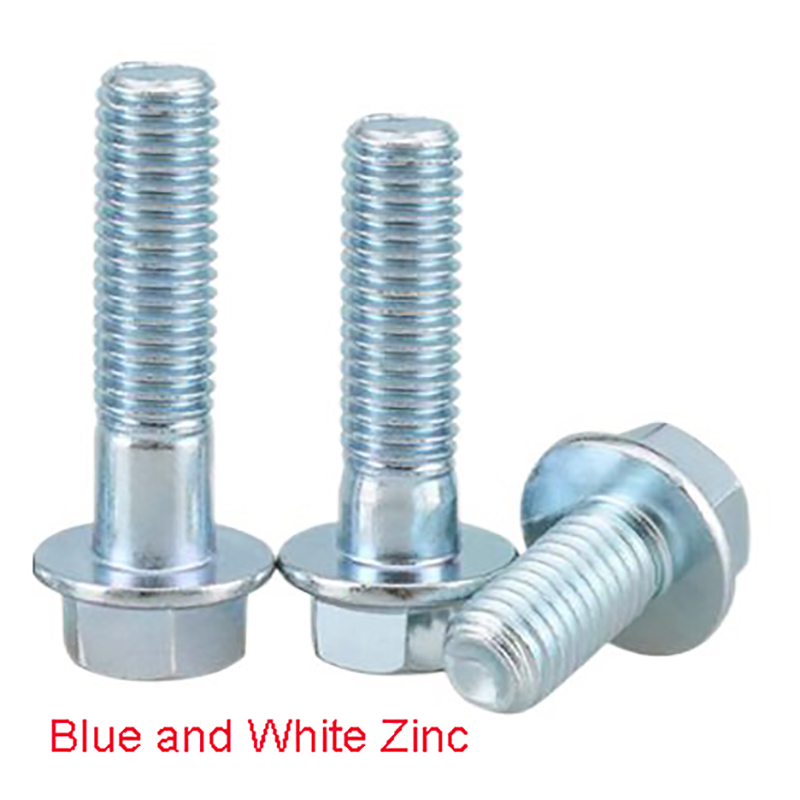
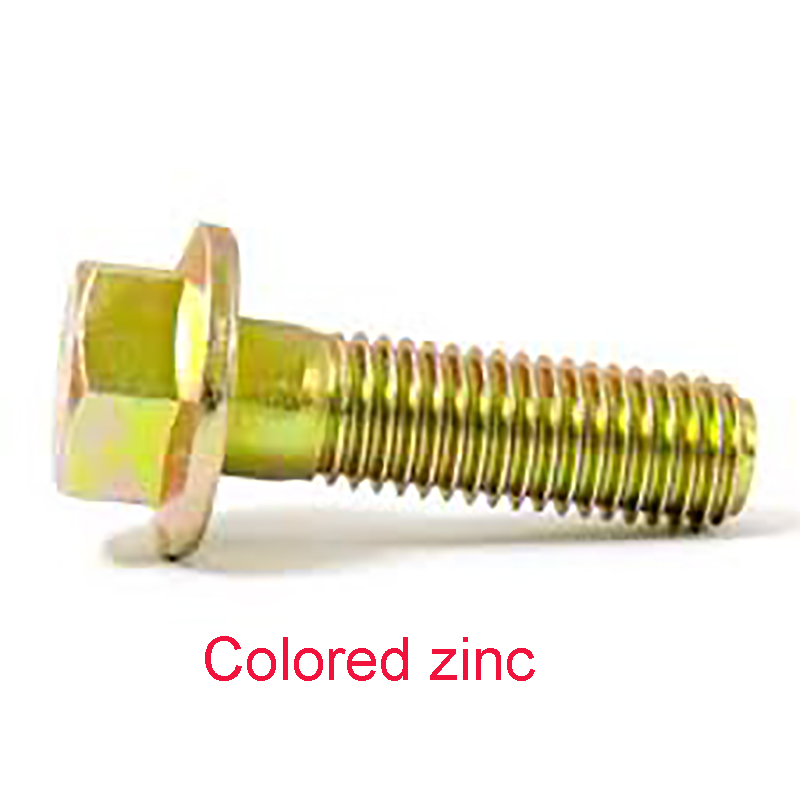
Galvanizing (Electroplating): Suitable for low-carbon steel fasteners, low cost, provides moderate corrosion resistance. An example is the electric zinc coating stud bolt, which is ideal for indoor or dry environments. Surface color varies (silver-white, gray, black, or colored) depending on the chemical composition and thickness of the passivation film.
Blue and white zinc Colored zinc
Hot-Dip Galvanizing Fastener: Involves immersion in molten zinc to form a thicker zinc layer, offering significantly better corrosion resistance than standard galvanizing. Suitable for outdoor or humid environments. The surface usually appears rough and dark gray. Note: Due to the thicker coating, hot-dip galvanized bolts require matching galvanized nuts and washers to avoid thread fit issues.
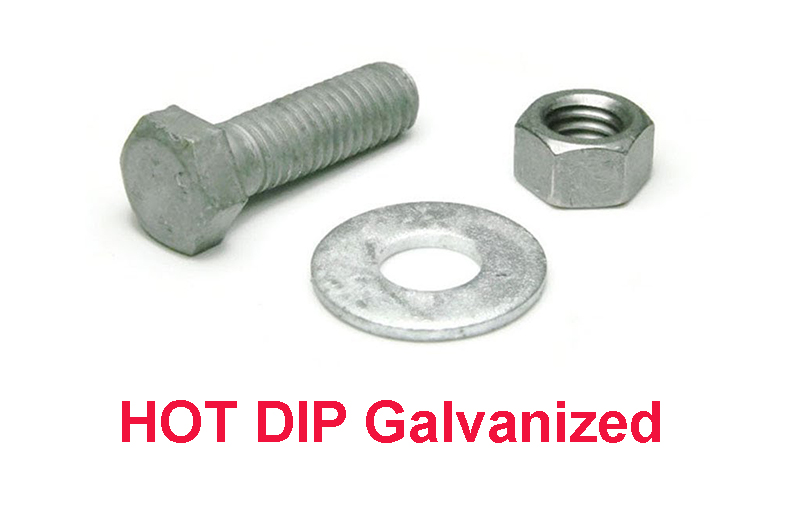
Hot Dip Galvanized
Chrome/Nickel Plating: Provides a smooth, aesthetically pleasing surface with moderate corrosion resistance and some wear resistance. Suitable for applications requiring decorative appearance or mild rust prevention.
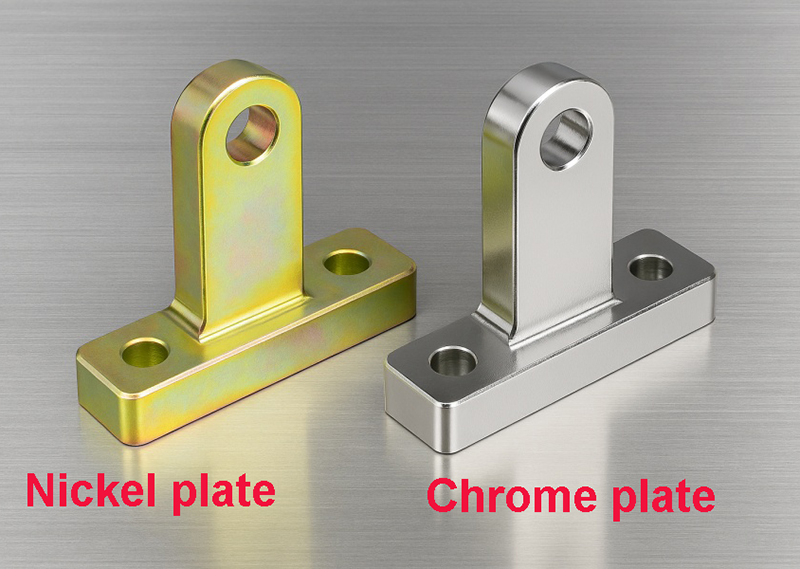
Nickel Plate and Chrome plate
PTFE Coating (Polytetrafluoroethylene): Offers excellent chemical inertness, low friction coefficient, and temperature resistance while enhancing corrosion protection. Suitable for chemical equipment, food machinery, or precision assemblies requiring reduced thread friction.


The PTFE coating is not only blue; it comes in other colors.
2. Stainless Steel
Stainless steel fasteners are renowned for their excellent corrosion resistance, primarily achieved by adding alloying elements like chromium and nickel to form a passive protective layer. Common types include:
Austenitic Stainless Steel (e.g., 304, 316): High nickel content, non-magnetic, with good corrosion resistance. Type 316, with added molybdenum, is particularly suitable for marine environments or high chloride-ion conditions.
Stainless steel fasteners are renowned for their excellent corrosion resistance, primarily achieved by adding alloying elements like chromium and nickel to form a passive protective layer. Common types include:
Austenitic Stainless Steel (e.g., 304, 316): High nickel content, non-magnetic, with good corrosion resistance. Type 316, with added molybdenum, is particularly suitable for marine environments or high chloride-ion conditions.
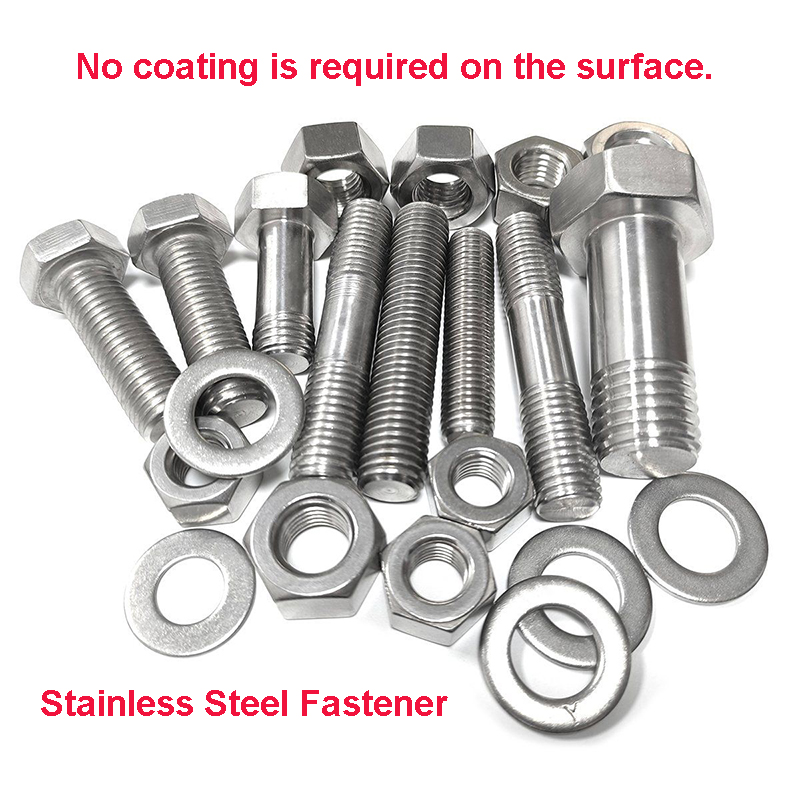
Stainless steel fastener: No coating is required on the surface
Martensitic Stainless Steel (e.g., 410): Can be strengthened through heat treatment, offering higher hardness but relatively weaker corrosion resistance.
Ferritic Stainless Steel: Contains chromium but no nickel, providing certain corrosion resistance at a lower cost.
Ferritic Stainless Steel: Contains chromium but no nickel, providing certain corrosion resistance at a lower cost.
Stainless steel fasteners are suitable for outdoor, chemical, marine, food, and medical industries but are priced higher than coated carbon steel products.
3. Nickel-Based Alloy Steel
Nickel-based alloys (e.g., Inconel, Monel, Hastelloy) offer exceptional performance in high-temperature, high-pressure, and highly corrosive environments. These materials typically contain high proportions of elements like nickel, chromium, and molybdenum and feature the following:
Outstanding high-temperature strength and oxidation resistance
Excellent resistance to acid, alkali, and seawater corrosion
Applicable in high-end fields such as aerospace, petrochemicals, and nuclear power
Nickel-based alloys (e.g., Inconel, Monel, Hastelloy) offer exceptional performance in high-temperature, high-pressure, and highly corrosive environments. These materials typically contain high proportions of elements like nickel, chromium, and molybdenum and feature the following:
Outstanding high-temperature strength and oxidation resistance
Excellent resistance to acid, alkali, and seawater corrosion
Applicable in high-end fields such as aerospace, petrochemicals, and nuclear power
Nickel-based alloy fasteners have higher costs and are usually selected only for extreme environments.

Nickel-based alloy fasteners: with outstanding resistance to high temperatures, high pressures and corrosion
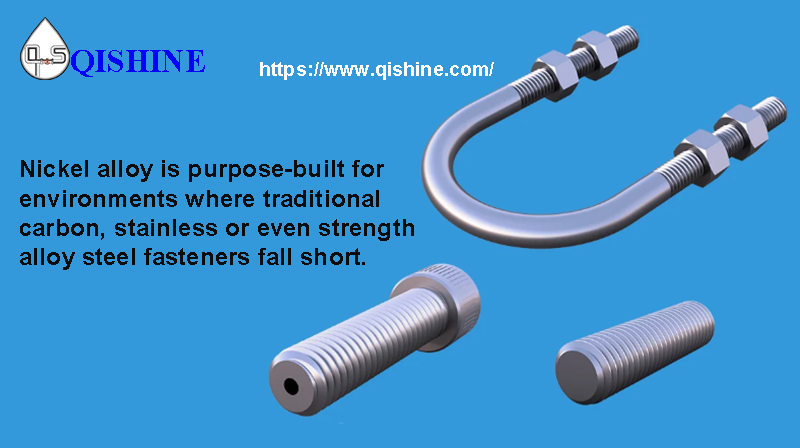
Nickel alloy is purpose-built for environments where traditional carbon, stainless or even strength alloy steel fasteners fall short.
Other Common Fastener Materials
4. Copper and Copper Alloys
Possess good electrical conductivity, thermal conductivity, and seawater corrosion resistance. Commonly used in electrical connections, marine fittings, and decorative applications. Common types include brass and bronze.
Possess good electrical conductivity, thermal conductivity, and seawater corrosion resistance. Commonly used in electrical connections, marine fittings, and decorative applications. Common types include brass and bronze.
5. Aluminum and Aluminum Alloys
Lightweight and resistant to atmospheric corrosion, but have lower strength. Suitable for lightweight structures, electronic equipment, and non-load-bearing applications.
Lightweight and resistant to atmospheric corrosion, but have lower strength. Suitable for lightweight structures, electronic equipment, and non-load-bearing applications.
6. Titanium Alloys
Feature high strength, light weight, and excellent corrosion resistance, making them especially suitable for aerospace, medical implants, and high-end sports equipment. Although costly, their performance is outstanding.
Feature high strength, light weight, and excellent corrosion resistance, making them especially suitable for aerospace, medical implants, and high-end sports equipment. Although costly, their performance is outstanding.
Qishine is ideal choice for EPC companies and project contractors.
Website: www.qishine.com
Email: qishine@qishine.com
Tel: 0592-5225595
Email: qishine@qishine.com
Tel: 0592-5225595
WhatsApp: +86 15960259563
How to Choose the Right Fastener Material?
Summary of Considerations:
1. Environmental Conditions: For damp, salt spray, acid/alkali media, or high-temperature environments, choose stainless steel, nickel-based alloys, or appropriately coated carbon steel.
2. Mechanical Requirements: Select appropriate strength grades (e.g., Grade 8.8, 10.9 bolts) based on load magnitude and vibration conditions.
3. Temperature Range: Use heat-resistant steel or nickel-based alloys for high-temperature environments; pay attention to the material's low-temperature toughness for cryogenic environments.
4. Electrical/Thermal Conductivity Needs: For electrical connections, choose copper or tin/silver-plated fasteners.
5. Budget Constraints: Balance initial cost against long-term maintenance expenses while meeting performance requirements.
6. Compatibility: Avoid direct contact between different metals to prevent galvanic corrosion (e.g., use insulating washers when pairing aluminum components with steel bolts).
Summary of Considerations:
1. Environmental Conditions: For damp, salt spray, acid/alkali media, or high-temperature environments, choose stainless steel, nickel-based alloys, or appropriately coated carbon steel.
2. Mechanical Requirements: Select appropriate strength grades (e.g., Grade 8.8, 10.9 bolts) based on load magnitude and vibration conditions.
3. Temperature Range: Use heat-resistant steel or nickel-based alloys for high-temperature environments; pay attention to the material's low-temperature toughness for cryogenic environments.
4. Electrical/Thermal Conductivity Needs: For electrical connections, choose copper or tin/silver-plated fasteners.
5. Budget Constraints: Balance initial cost against long-term maintenance expenses while meeting performance requirements.
6. Compatibility: Avoid direct contact between different metals to prevent galvanic corrosion (e.g., use insulating washers when pairing aluminum components with steel bolts).
Practical Recommendations:
Indoor Dry Environments: Standard galvanized carbon steel is usually sufficient.
Outdoor or Humid Environments: Prioritize hot-dip galvanized carbon steel or Type 304 stainless steel.
Marine or Chemical Environments: Consider Type 316 stainless steel or nickel-based alloys.
High-Temperature, High-Pressure Equipment: Consider alloy steel or specialized nickel-based materials.
Indoor Dry Environments: Standard galvanized carbon steel is usually sufficient.
Outdoor or Humid Environments: Prioritize hot-dip galvanized carbon steel or Type 304 stainless steel.
Marine or Chemical Environments: Consider Type 316 stainless steel or nickel-based alloys.
High-Temperature, High-Pressure Equipment: Consider alloy steel or specialized nickel-based materials.
Important Notes
This guide provides references primarily based on material performance. For actual selection, consulting suppliers or professional engineers is recommended.
The surface color of fasteners may vary due to processing techniques and batches; material should not be judged by appearance alone.
For critical load-bearing structures, mechanical verification or third-party testing is essential.
This guide provides references primarily based on material performance. For actual selection, consulting suppliers or professional engineers is recommended.
The surface color of fasteners may vary due to processing techniques and batches; material should not be judged by appearance alone.
For critical load-bearing structures, mechanical verification or third-party testing is essential.
Correctly selecting fastener materials is a crucial step in ensuring engineering safety and durability. By understanding the characteristics and suitable application scenarios of different materials, you can find the optimal balance between cost and performance, enhancing the overall reliability and service life of your project.
4 Common Industrial Valves
6 Common Types of Pipe Fittings Explained in Detail
Related Article

Insights from a Case Study on Exporting B8M Fasteners.Recently, during our final outgoing inspection of a batch of B8M stainless steel fasteners destined for Portugal, we discovered varying degrees of burrs on the edges of the bolt hex heads.
How to Efficiently Remove Burrs from Bolt Edges

Insulating Gasket Procurement Pitfalls: From "Price Traps" to "Supplier Selection"
What pitfalls should you watch out for when purchasing insulating gaskets

As a classic modified PTFE gasket material from Garlock, Gylon 3500 is widely used in petrochemical, chemical, and other industries for its excellent resistance to strong acids, solvents, and anti-creep properties.
How to Buy Genuine Gylon 3500 Insulating Gaskets at Competitive Prices in China

