
ASTM A453 Gr 660 Stud Bolt and Nut-High - Temperature Fasteners for Critical Applications
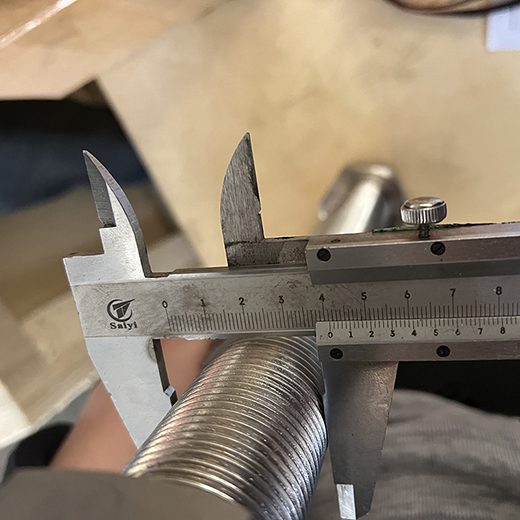
Bolted joints at high temperature fail quietly: preload relaxes, creep sets in, and the seal is lost long before anyone notices. ASTM A453 Gr 660 stud bolts and nuts — a nickel-chromium-iron alloy grade widely known as Inconel 660 — hold that load where ordinary bolting gives up, while the joint still depends on sound flange gaskets to stay leak-free.
Material and Classification
ASTM A453 Gr 660 covers stud bolts and nuts machined from a nickel-chromium-iron alloy (Inconel 660) that combines high-temperature mechanical strength with resistance to oxidation and corrosion. The specification splits the bolting into four classes — A, B, C and D — each aimed at a different service duty.
- Class A — exceptional mechanical strength at elevated temperatures, with strong resistance to thermal stress relaxation and creep deformation.
- Class B — engineered to withstand hydrogen attack at high temperatures in petrochemical reactors and pressure vessels.
- Class C — suitable for extreme cold and cryogenic service, where conventional fastener materials embrittle.
- Class D — controlled heat treatment for high-temperature service, keeping structural stability and corrosion resistance.
The four classes share one alloy base; what changes is heat treatment, testing and the environment each class is qualified for. Their suitability for extreme conditions is backed by extensive testing.
Where This Bolting Works
Power generation, oil and gas, petrochemical, aerospace, automotive, chemical processing and nuclear plants all run joints that see extreme temperature. On high-temperature pipe flanges of turbines, reactors and pressure vessels, A453 Gr 660 stud bolts keep gasket load through start-ups, shutdowns and thermal cycles.
- Power generation — steam and gas turbines, boiler systems and high-temperature piping.
- Oil and gas — wellhead equipment, valves and high-pressure piping in drilling and production.
- Petrochemical and chemical — reactors, heat exchangers, distillation columns, furnaces and pressure vessels.
- Aerospace — rocket engines and turbines under extreme temperature in flight and re-entry.
- Automotive — engine components, exhaust systems and turbochargers.
- Pressure equipment and nuclear — boiler and vessel construction, reactor vessels, steam generators and coolant systems.
In every case the fasteners resist thermal stress, creep and corrosion, preventing leaks and protecting people, equipment and the environment.
Benefits and Selection
Four properties make this bolting the default choice for critical hot joints.
- High-temperature stability — strength and structural integrity retained under prolonged heat exposure.
- Thermal stress resistance — slow relaxation and creep, so preload survives long service.
- Corrosion resistance — stands up to oxidation, corrosion and scaling in harsh environments.
- Versatility — four classes cover elevated-temperature, hydrogen, cryogenic and controlled-structure duty.
Select the class from the service environment first — hydrogen, cryogenic or sustained high temperature — then match size and length to the joint. Keep traceability to the ASTM A453 heat number, and pair the bolting with gaskets rated for the same temperature and media.
Frequently Asked Questions
What is ASTM A453 Gr 660 made of?
A nickel-chromium-iron alloy widely known as Inconel 660, chosen for high-temperature mechanical properties and corrosion resistance.
Which class is for hydrogen service?
Class B — it is engineered to withstand hydrogen attack at high temperatures, typically in petrochemical reactors and pressure vessels.
Can Gr 660 stud bolts run at cryogenic temperatures?
Yes — Class C is intended for extreme cold service, where conventional fastener materials embrittle and lose toughness.
What is the difference between Class A and Class D?
Class A targets exceptional mechanical strength at elevated temperature; Class D adds controlled heat treatment for structural stability with retained corrosion resistance.
Do these stud bolts change the gasket requirement?
The seal still comes from the gasket: pair the bolting with gaskets rated for the same temperature, pressure and media.
ASTM A453 Grade 660 Bolting - Enhancing Structural Integrity for High-Temperature Applications
Thermoseal C4400 Flange Isolation Gasket Kit - Ensuring Efficient and Reliable Flange Sealing
Related Article


