
Where are the fresh opportunities for fastener exports?
author: www.qishine.com
2025-11-11

One-Minute Overview
- Brazil’s online retail market is already worth US$80 billion and still growing at over 20% a year.
- Saudi Arabia alone is pouring more than US$500 billion into petrochemicals, creating voracious demand for heat- and corrosion-resistant fasteners.
- In the UAE, per-capita GDP tops US$40,000 and Internet penetration is 99%, fertile ground for online sales of high-end fasteners.
- Indonesia, Vietnam and Thailand are expanding their automotive, electronics and construction sectors at annual rates exceeding 10%, fuelling explosive demand for industrial fasteners.
Against the backdrop of eroding share in traditional Europe–America markets, where are the fresh opportunities for fastener exports?
New Blue Oceans for Fastener Exports – Decoding the Opportunities in South-East Asia, the Middle East and Latin America
> Fueled by Saudi Arabia’s Vision 2030, China’s fastener exports to the Kingdom reached US$820 million, with cross-border e-commerce channels surging to 27% of the total.
The long-standing pattern of Chinese fastener exports that leaned heavily on Europe and the United States is undergoing a tectonic shift. As global production relocates and emerging markets launch massive infrastructure programmes, South-East Asia, the Middle East and Latin America have become the new engines of growth for China’s fastener sales abroad.
Data show that in 2024 the share of Chinese fastener exports sold online to Europe and America slid from 65% in 2020 to 48%, while the combined share of emerging markets in South-East Asia, the Middle East and Latin America jumped to 39%.
This re-segmentation signals a structural reshuffle in world fastener trade.
01 South-East Asia – Manufacturing Relocation Meets Policy Dividends
Benefiting from the twin drivers of industrial relocation and regional trade agreements, South-East Asia is turning into a key growth pole for Chinese fasteners.
During January-May 2025, 28% of China’s fastener exports were shipped to the region, with Malaysia and Vietnam posting increases above 35%.
Geographical proximity is only part of the story; industrial complementarity matters more. Indonesia, Vietnam and Thailand are expanding their automotive, electronics and construction sectors at annual rates exceeding 10%, fuelling explosive demand for industrial fasteners.
A Haiyan-based company in Jiaxing, for example, sold high-strength automotive bolts to Indonesia through Lazada and saw its 2024 revenue jump 210%.
At the policy level, the entry-into-force of RCEP has given China-ASEAN fastener trade an extra push. Tariffs on fasteners traded inside the bloc have fallen to 0-5%, sharpening the price edge of Chinese products.
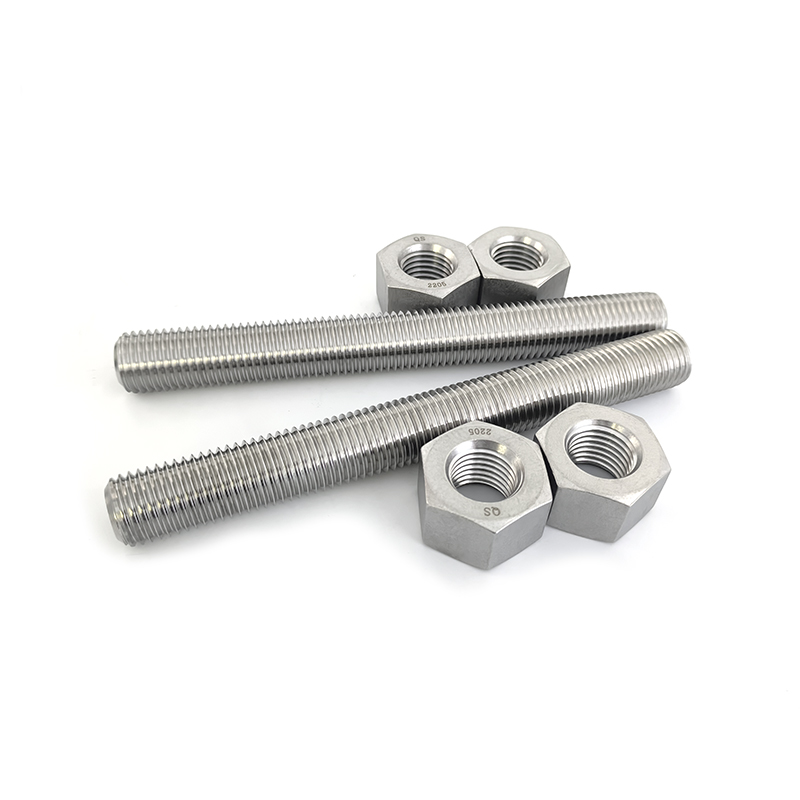
Qishine Duplex stainless steel 2205 stud bolts and Nuts
02 The Middle East – Construction Fever and Energy Transition
Gulf countries led by Saudi Arabia and the UAE are rolling out giga-projects that translate into rare windows for Chinese fastener exporters.
Saudi Vision 2030 is powering a roster of mega-developments—NEOM, the Red Sea Project, World-Cup stadiums in Qatar—spurring an explosion in construction-fastener demand.
The kingdom currently has US$613 billion worth of projects under way, placing its building market firmly among the world’s top three.
Jeddah, the commercial hub on the Red Sea, has seen its population rocket from 2 million in 1992 to 5 million in 2024, spawning super-complexes such as Murooj and Jeddah Center that soak up vast quantities of building fasteners.
Beyond traditional construction, the region’s energy transition is carving out a premium niche. The UAE plans to lift the share of renewables to 50% by 2030; one Chinese supplier of anti-seismic fastening systems for PV plants saw 2024 orders leap 300%.
Saudi Arabia alone is pouring more than US$500 billion into petrochemicals, creating voracious demand for heat- and corrosion-resistant fasteners. A Chinese company developed special bolts rated for 600°C and now commands 25% of the Saudi market.
03 Latin America – E-Commerce Boom Meets Localisation Hurdles
Despite local-content headaches, Latin America’s e-commerce take-off offers Chinese exporters a brand-new playbook.
Brazil’s online retail market is already worth US$80 billion and still growing at over 20% a year.
Mexico’s auto-parts rules require 60% local value, a hurdle that doubles as an opportunity. One Chinese firm formed a joint venture with a local partner to produce NAFTA-compliant fasteners and successfully entered the supply chains of GM and Ford.
Others adopt a “China-made + Brazilian bonded warehouse” model, sidestepping punitive tariffs while keeping a firm foothold in the region.
04 Go-to-Market Strategy – Localisation & Digitalisation in Tandem
Winning in emerging markets demands a different toolkit from the one used in the West.
Localisation is the ticket to stay. Chinese companies have set up roughly 120 dedicated fastener warehouses worldwide, covering both mature and emerging markets. One enterprise even embedded a laboratory in its German warehouse, enabling torque and salt-spray tests on the spot and cutting new-product lead time to 30 days.
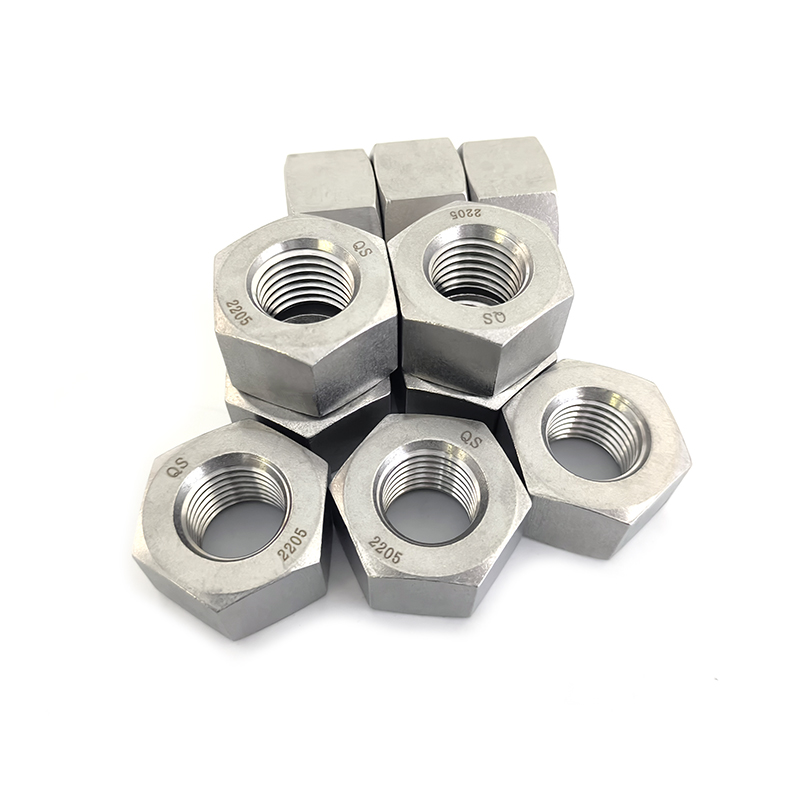
Qishine Duplex stainless steel 2205 Nuts
Digital marketing is now indispensable. Cross-border platforms compress the classic B2B procurement cycle from 3-6 months to under 15 days through “online inquiry–smart matching–fast delivery” loops. Leading players build “fastener-selection databases” that offer 3-D models, installation videos and real-time tech support, lifting repeat-purchase rates to 65%.
Supply-chain optimisation is equally critical. The Chengdu–Tilburg China-Europe Railway Express trims transit time from 45 days by sea to 15 days while slashing cost by 60% versus air freight. Some shippers now use solar-powered warehouses and electric trucks, winning EU carbon-tax rebates that improve price competitiveness by 12%.
In Indonesia, the ranks of the middle class have surpassed 100 million, stoking appetite for Special fasteners. One Chinese supplier spotted the trend and launched gold-plated, rust-proof decorative bolts that sell more than 100,000 pieces a month on Shopee.
In the UAE, per-capita GDP tops US$40,000 and Internet penetration is 99%, fertile ground for online sales of high-end fasteners.
From South-East Asia’s manufacturing relocation to the Middle East’s construction boom and Latin America’s e-commerce surge, emerging markets are redrawing the global map for Chinese fastener exports.
Chinese bolt makers have already deployed capacity across the Americas, Europe, Asia-Pacific, the Middle East and Africa, a sign that the worldwide reach of China’s fastener industry is set to deepen even further.
FAQ
What is Vietnam and Thailand?
Indonesia, Vietnam and Thailand are expanding their automotive, electronics and construction sectors at annual rates exceeding 10%, fuelling explosive demand for industrial fasteners.
What is the minimum order quantity for fasteners?
Standard items can be supplied from one piece. Special grades, non-standard lengths and custom coatings are quoted per drawing, so the minimum is set by the specification you send.
What lead time should be expected?
Normal production is completed within 30 days as a rule. The actual schedule depends on quantity, material grade and surface treatment, and stock items can go out immediately.
How are payments handled?
We accept common international terms including T/T and L/C. The final arrangement is agreed together with the quotation for each order.
Qishine is ideal choice for EPC companies and project contractors.
Website: www.qishine.com
Email: qishine@qishine.com
Tel: 0592-5225595
WhatsApp: +86 15960259563
+86 15985833169
Website: www.qishine.com
Email: qishine@qishine.com
Tel: 0592-5225595
WhatsApp: +86 15960259563
+86 15985833169
30% of Fastener Factories Have Closed: How to Survive the Low-End Crisis?
Third-Party Inspection Passed – Xiamen Qishine’s 660 Fasteners Earn Global Recognition Once Again
Related Article

Burr-free bolt edges are the basis of accurate preload: burrs scatter torque, cut gasket surfaces and trap moisture at the thread runout. Compare hand, brush, tumble and CNC deburring, then check the chamfer.
How to Efficiently Remove Burrs from Bolt Edges

Most insulating gasket purchases fail on material substitution, missing electrical data and weak supplier screening rather than on price. Ask for samples, third-party test reports and case history before the order.
What pitfalls should you watch out for when purchasing insulating gaskets

Gylon 3500 is Garlock's modified PTFE gasket sheet for acid and solvent service, and counterfeits are common when buying in China. The guide covers supplier screening, three authenticity checks and the pricing levers.
How to Buy Genuine Gylon 3500 Insulating Gaskets at Competitive Prices in China

