
Application and development trend of 718 nickel-based high-temperature alloy
author: www.qishine.com
2025-01-19

718 material is a nickel-based high-temperature alloy that is widely used in the aerospace field and the petroleum and chemical industry. This article will introduce the composition, preparation process, mechanical properties and application fields of 718 material, and discuss its future development trend.
718 material is a nickel-based high-temperature alloy composed of nickel (Ni) and iron (Fe). It has excellent heat resistance, corrosion resistance and fatigue resistance, so it is widely used in high temperature and corrosive environments such as aerospace, petroleum and chemical industries.
1. Composition of 718 materials
The main components of 718 materials are nickel (Ni), iron (Fe), chromium (Cr), cobalt (Co), molybdenum (Mo) and aluminum (Al), of which the content of nickel is generally more than 50%.
Contains a small amount of titanium (Ti), zirconium (Zr) and carbon (C) and other elements. The comprehensive properties of these elements make 718 material have excellent heat resistance and corrosion resistance.
The main components of 718 materials are nickel (Ni), iron (Fe), chromium (Cr), cobalt (Co), molybdenum (Mo) and aluminum (Al), of which the content of nickel is generally more than 50%.
Contains a small amount of titanium (Ti), zirconium (Zr) and carbon (C) and other elements. The comprehensive properties of these elements make 718 material have excellent heat resistance and corrosion resistance.
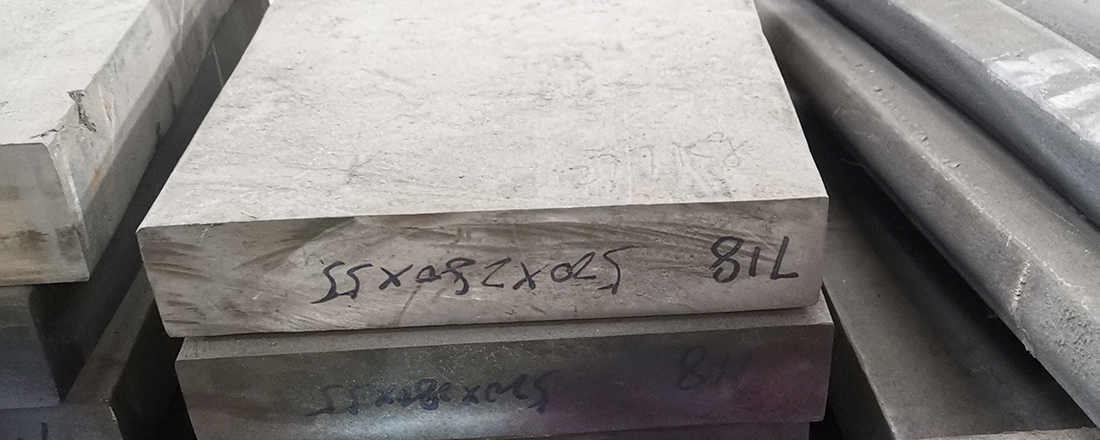
2. Preparation process of 718 material
The preparation of materials generally adopts the method of melt casting and heat treatment. First, various elements in the alloy are melted by vacuum induction melting or electroslag remelting to obtain a uniform alloy liquid. Then the alloy liquid is poured into a pre-designed mold and formed into a fixed material through the solidification and curing process. Finally, the fixed material is heat treated to further improve the performance of the material.
The preparation of materials generally adopts the method of melt casting and heat treatment. First, various elements in the alloy are melted by vacuum induction melting or electroslag remelting to obtain a uniform alloy liquid. Then the alloy liquid is poured into a pre-designed mold and formed into a fixed material through the solidification and curing process. Finally, the fixed material is heat treated to further improve the performance of the material.
During use, it needs to be heat treated to improve its mechanical properties and corrosion resistance. Next, we will focus on the heat treatment process and effect of 718.
(1) 718 Heat Treatment Process
718 Material heat treatment mainly includes two processes: aging treatment and solution treatment.
1) Time-limited processing
Aging treatment refers to the constant temperature treatment of materials after solution treatment to adjust the grain size of the material and improve its mechanical properties and corrosion resistance. The aging treatment of 718 materials is usually divided into two stages: low temperature aging first, and then high temperature aging.
Aging treatment refers to the constant temperature treatment of materials after solution treatment to adjust the grain size of the material and improve its mechanical properties and corrosion resistance. The aging treatment of 718 materials is usually divided into two stages: low temperature aging first, and then high temperature aging.
The low temperature aging temperature is generally around 720℃, and the duration is generally around 8 hours. Low temperature aging can improve the hardness and strength of the material to a certain extent, and also improve its creep resistance.
The high temperature aging temperature is generally around 980℃, and the duration is generally around 8 hours. High temperature aging can increase the grain size of the material and improve its tensile strength, yield strength and fracture toughness.
2) Solution treatment
Solution treatment refers to heating the material to a certain temperature to make the elements inside it dissolve evenly, and then cooling it at an appropriate temperature. The solution treatment temperature of 718 material is generally
1020~1100℃, the holding time is generally about 1 hour. Solution treatment can eliminate the residual stress and overhard phase inside the material and improve the plasticity and hot workability of the material.
(2) 718 heat treatment effect
Heat treatment of 718 material can significantly improve its mechanical properties and corrosion resistance, as shown below:
1) Mechanical properties
After heat treatment, the hardness, strength and toughness of 718 material are improved. After low temperature aging, the hardness and strength of the material increase slightly, but the toughness is improved; after high temperature aging, the strength and hardness of the material are significantly improved, and the toughness is also improved.
Heat treatment of 718 material can significantly improve its mechanical properties and corrosion resistance, as shown below:
1) Mechanical properties
After heat treatment, the hardness, strength and toughness of 718 material are improved. After low temperature aging, the hardness and strength of the material increase slightly, but the toughness is improved; after high temperature aging, the strength and hardness of the material are significantly improved, and the toughness is also improved.

2) Corrosion resistance
The corrosion resistance of 718 material is one of its important properties. After heat treatment, the corrosion resistance of the material is significantly improved. Studies have shown that after solution treatment and aging treatment, the corrosion resistance of 718 material is better than that of subsequent cooling treatment.
The corrosion resistance of 718 material is one of its important properties. After heat treatment, the corrosion resistance of the material is significantly improved. Studies have shown that after solution treatment and aging treatment, the corrosion resistance of 718 material is better than that of subsequent cooling treatment.
(3) Notes
The heat treatment process of 718 material is complicated, and the following points need to be noted:
1) Temperature control. During heat treatment, the temperature must be controlled within a precise range, otherwise the material properties will deteriorate.
The heat treatment process of 718 material is complicated, and the following points need to be noted:
1) Temperature control. During heat treatment, the temperature must be controlled within a precise range, otherwise the material properties will deteriorate.
2) Time control. The aging process needs to be strictly controlled. If the low-temperature aging time is too long, the creep property of the material will be reduced. If the high-temperature aging time is too long, the grain size of the material will grow.
Strength and hardness decreased.
3) Material composition. The composition of 718 material has a great influence on its heat treatment effect. Elements such as Si, Al, Ti, and C in the material will affect the effect of solution treatment and aging treatment.
Heat treatment of 718 material is an important method to improve its mechanical properties and corrosion resistance. Through reasonable solution treatment and aging treatment, the mechanical properties of the material such as ductility, crack resistance and fatigue resistance can be effectively improved. At the same time, the corrosion resistance and hydrogen embrittlement resistance of the material can also be improved, so as to better meet the needs of various industrial fields for high-performance and high-temperature materials.
3. Mechanical properties of 718 material
718 material has good mechanical properties, including high strength, high toughness and fatigue resistance. Its tensile strength can reach more than 1400 MPa and its yield strength exceeds 1200 MPa.
In addition, 718 material has good hardness and wear resistance and can be used to manufacture high-speed moving parts.
In addition, 718 material has good hardness and wear resistance and can be used to manufacture high-speed moving parts.
718 yield strength refers to the threshold value of plastic deformation of alloy 718 during stress. Alloy 718 is a high-strength, high-heat-resistant alloy with excellent mechanical properties and corrosion resistance. It is mainly composed of nickel, chromium, iron and other elements, of which the nickel content exceeds 50%, making alloy 718 have extremely high strength and heat resistance.
The strength of Alloy 718 is mainly controlled by its crystal structure and composition. The crystal structure of Alloy 718 is a face-centered cubic structure, which has a high density and good mechanical properties. In addition, the nickel element in Alloy 718 has a solid solution strengthening effect, which can significantly improve the yield strength of the alloy. In addition, other alloying elements in Alloy 718, such as chromium and iron, can also increase the yield strength of the alloy through solid solution strengthening, precipitation hardening, etc.
In practical applications, the yield strength of 718 is an important reference for formulating the use restrictions of alloy 718 materials. In high temperature environments, the yield strength of alloy 718 will decrease as the temperature increases. Therefore, the use temperature of alloy 718 in high temperature environments needs to be determined based on its yield strength to ensure the safety and reliability of the material. In addition, the yield strength of alloy 718 is also affected by factors such as stress and deformation rate, which also need to be taken into account.
In order to improve the yield strength of alloy 718, some measures can be taken. For example, the yield strength of alloy 718 can be increased by adjusting the composition ratio of alloy 718 and increasing the content of alloying elements. In addition, the crystal structure and organizational state of the alloy can be changed by heat treatment and other methods to improve the yield strength of the alloy. In addition, cold deformation of alloy 718 can also significantly increase its yield strength, but at the same time it will also reduce its plasticity and toughness.
Alloy 718 has excellent mechanical properties and corrosion resistance. Its yield strength is affected by factors such as crystal structure, alloy element content, temperature, and stress. In order to improve the yield strength of Alloy 718, it can be improved by adjusting the composition ratio, heat treatment, and cold deformation. The yield strength of Alloy 718 is of great significance to its use restrictions in high temperature environments.
4. Application fields of 718 alloy materials
Due to its excellent performance, 718 material is widely used in the aerospace field and the petroleum and chemical industry. In the aerospace field, 718 material is used to manufacture key parts such as turbine blades, combustion chamber components, bearings and fixed wings. In the petroleum and chemical industry, 718 material is used to manufacture chemical reactors, catalyst carriers, high-temperature furnaces and drilling equipment.
Due to its excellent performance, 718 material is widely used in the aerospace field and the petroleum and chemical industry. In the aerospace field, 718 material is used to manufacture key parts such as turbine blades, combustion chamber components, bearings and fixed wings. In the petroleum and chemical industry, 718 material is used to manufacture chemical reactors, catalyst carriers, high-temperature furnaces and drilling equipment.
5. Future development trend of 718 materials
With the continuous development of the aerospace field and the petroleum and chemical industry, the demand for 718 materials will continue to increase. In the future, the research focus of 718 materials will include further improving the high temperature strength and corrosion resistance of the materials, reducing the preparation cost of the materials, and improving the sustainability of the materials. With the advancement of materials science and preparation technology, it is believed that 718 materials will have broader application prospects in the future.
With the continuous development of the aerospace field and the petroleum and chemical industry, the demand for 718 materials will continue to increase. In the future, the research focus of 718 materials will include further improving the high temperature strength and corrosion resistance of the materials, reducing the preparation cost of the materials, and improving the sustainability of the materials. With the advancement of materials science and preparation technology, it is believed that 718 materials will have broader application prospects in the future.
Application and development trend of nickel-based alloy Inconel 600
Development of high temperature alloy materials
Related Article

Insights from a Case Study on Exporting B8M Fasteners.Recently, during our final outgoing inspection of a batch of B8M stainless steel fasteners destined for Portugal, we discovered varying degrees of burrs on the edges of the bolt hex heads.
How to Efficiently Remove Burrs from Bolt Edges

Insulating Gasket Procurement Pitfalls: From "Price Traps" to "Supplier Selection"
What pitfalls should you watch out for when purchasing insulating gaskets

As a classic modified PTFE gasket material from Garlock, Gylon 3500 is widely used in petrochemical, chemical, and other industries for its excellent resistance to strong acids, solvents, and anti-creep properties.
How to Buy Genuine Gylon 3500 Insulating Gaskets at Competitive Prices in China

